Field Journal: 08/08/2026
I woke to the sound of chickens clucking softly and the hum of the fan at the foot of my bed. I rolled over and checked the time and miraculously woke at 4:59, a minute before my alarm. I threw back the thin sheet and shuffled to the bathroom to get ready for the day. I dressed quickly and packed my bag for the day to meet Mr. Carillo at the bus terminal for our trip to Corozal for an interview. I take my bag from the small house surrounded by avocado trees and make the short journey to the main house where I am staying in Petville, Orange Walk. The chickens take notice, and three of them follow closely behind, hoping I have food for them. But first, coffee.
I toss my backpack into a chair and greet my host with a yawn. I am not a morning person like they are, so I immediately make myself a cup of instant coffee, the standard here when I need fast caffeine. As a graduate student, I am fueled by caffeinated beverages, and instant is the easiest way to go, especially when it is already over 90 degrees Fahrenheit and the sun is only rising. The humidity in the air makes my long hair stick to my skin, so I have my hair permanently twisted, tied, or pinned up. Instant coffee is easy to mix with lukewarm water and quickly add ice for a refreshing start to my day.
As a coffee addict, I have been pleasantly surprised by the recent boom in cafes and coffee shops in the northern region of Belize. Orange Walk town alone has more than 6 within a 15-minute drive of each other. I have been to four during my three-month stay here. Mr. Carillo and I have found it a nice treat after a long morning in the sun doing village visits and interviews. I got to try out a local place in Corozal today after an interview while we waited for a bus back home. We stopped at the Latte Lab, owned by a local Belizean, upon the suggestion of my interviewee. It was good coffee, made well, not too sweet, and a colorful place.
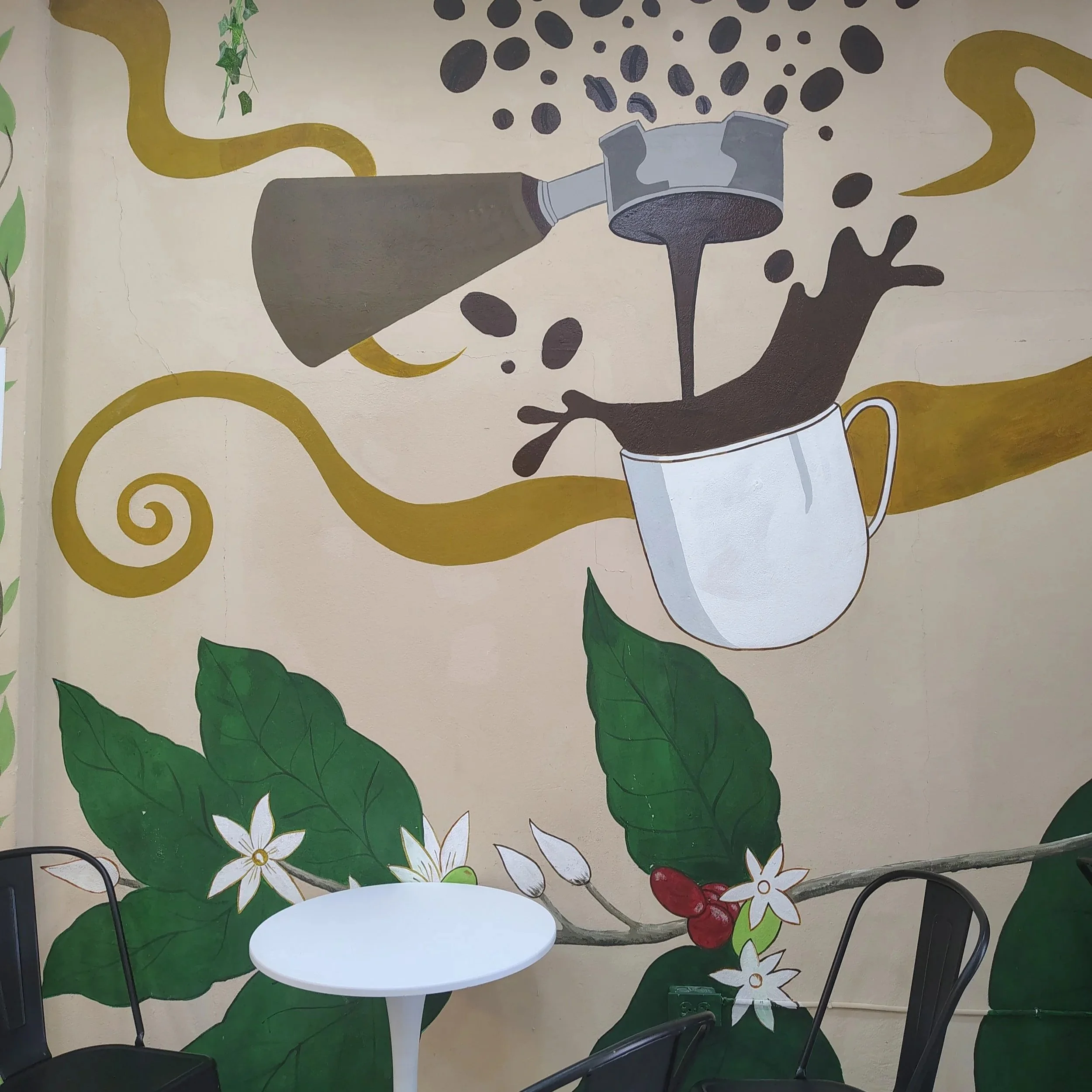
Decorative interior of the Latte Lab in Corozal depicting a branch of the coffee plant, genus Coffea, in fruit and flower.
One of the many things I like about Belize is the local murals and decorative artwork that color many of the buildings. Mr. Carillo has even been part of a collaborative artistic project to paint Orange Walk town murals. It was completed 5 years ago to celebrate the 40th anniversary of independence of this nation from British rule. I am always blown away by the beautiful work by Belizean artists when I travel through the country. My time in Orange Walk and the surrounding villages has only continued to stun me with the great talents that are born and raised in Belize. I am hoping to return in 5 years to witness the half-century celebration and more astonishing artwork by locals.
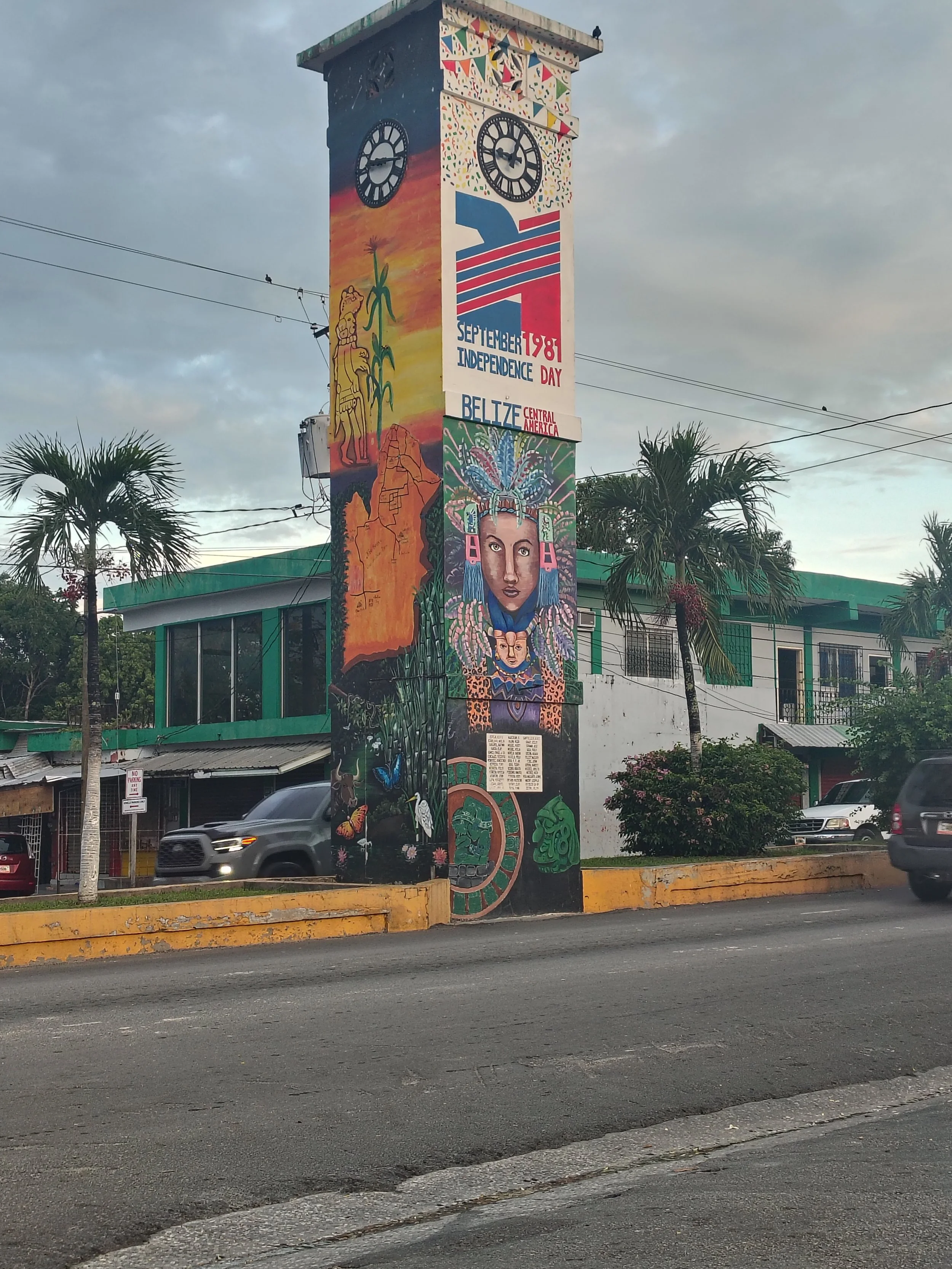
Orange Walk Clock Tower mural as part of the 40th anniversary of independence.
Speaking with locals about their experiences with stingless bees, apiculture, farming, and growing up in Belize is always the best part of my research. I am very fortunate that my work takes me to such amazing places to meet such wonderful individuals. They gladly share heartfelt stories, astonishing experiences, and very often, great food. My time this year in the northern region of Belize has been an important stage of my research to document the knowledge of the Yucatec Maya, or more specifically, the Icaiche and Cruso’ob Maya (more to come later on this topic).
The northern Maya peoples were displaced during the Caste Wars, which also occurred in the Yucatan, Mexico. Many families from Quintana Roo attempted to escape the war by fleeing to Belize, known then as British Honduras. Some of my interviews have been with their descendants, and I am honored to hear the stories of Maya resilience from that time. When these families moved, they had to leave much behind and start over in Belize.
And of course, I got to see some bees while in Corozal today. One of the traditional practices passed down to some is meliponinculture, or stingless beekeeping. Unfortunately, this practice is rapidly disappearing in some Belizean communities. Many of my interviews with locals who still know about these bees report that this tradition is disappearing due to deforestation, agricultural chemicals, illegal logging, and many other environmental challenges. Hearing the tales of the family from Corozal, how they learned from the grandmother who fled to the town during the Caste Wars to start a new life there, was truly inspiring while simultaneously upsetting, as it was told by her grandchild (58) and great-grandchild (33), who feel the bees may be lost forever due to the challenges they face today.
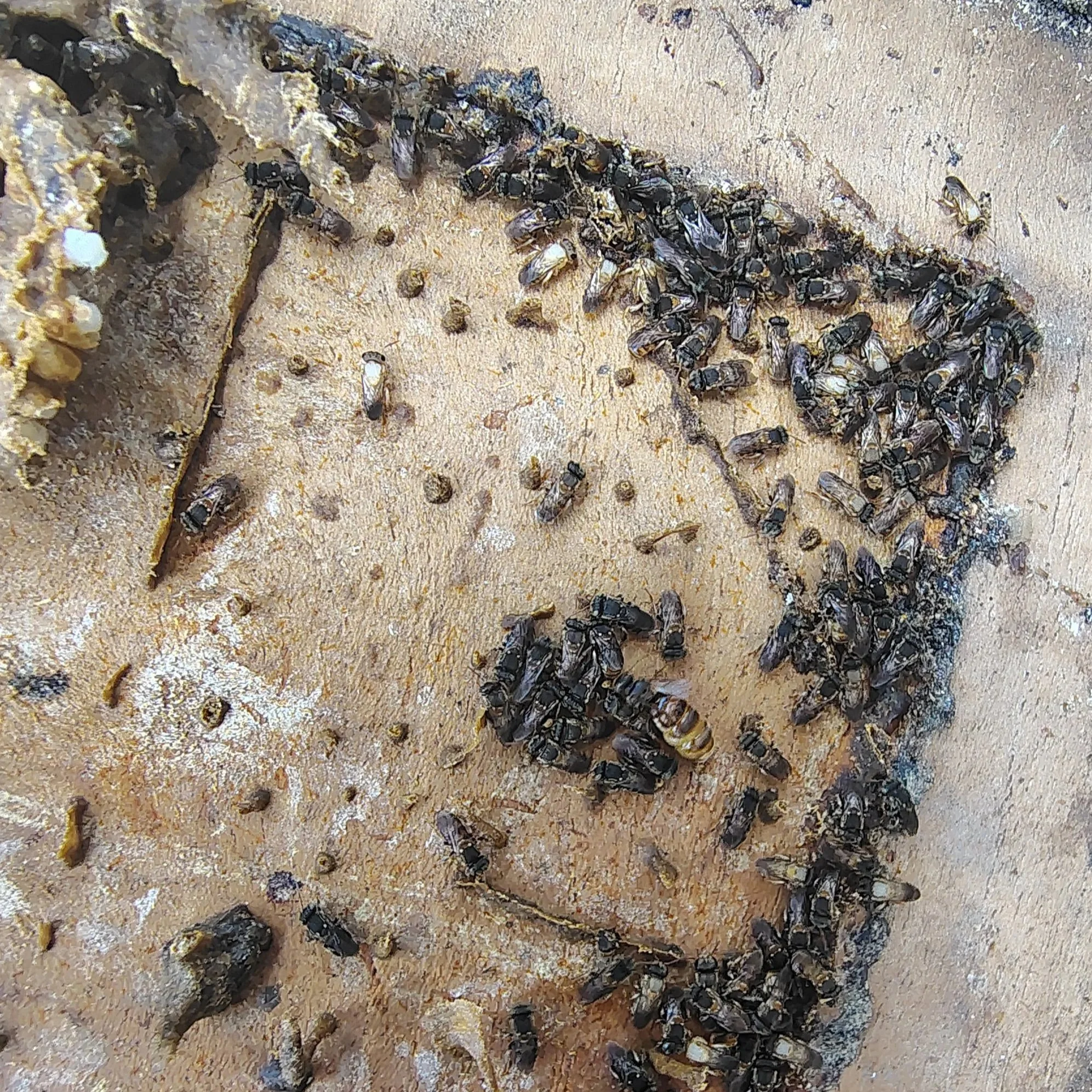
A colony of stingless bees with a queen clearly visible by her enlarged abdomen, surrounded by workers on the lid of a small hive box.
However, I want to try and do what I can to help them save these bees and the traditional knowledge as their caregivers. There are many species of stingless bees found in Belize, some are considered sacred for their medicinal honey while others are known pollinators of local crops and fruit trees. Conserving the bees means protecting the forests they thrive in. From my time spent with Maya elders over the past three years of field work, this is the echoing message I hear each time I visit a village home. Belizeans want to continue this traditional practice but find it devestatingly difficult in the environment they live in today, often describing the forests they watched disappear years ago in a longing and passionate manner. May we find a way to save the bees by saving the trees as we continue our work tomorrow.
