October in North Carolina has a slight chill in the air, but it's still not yet sweater weather. I grow excited when all the local shops and cafes transition to fun Fall flavors with cinnamon and allspice. Filling the air with the smell of freshly baked pumpkin bread is how I celebrate the first week of the month! I am a huge fan of Spooky Season and love decorating my home with pumpkins, bats, and witchy vibes. Since I was a small child, I enjoyed costumes and scary stories. But as an ethnoecologist, I remember that this is an important time of year for many cultures, and the symbolism of Halloween has a layered, complex history.
Common Symbols of Witchcraft
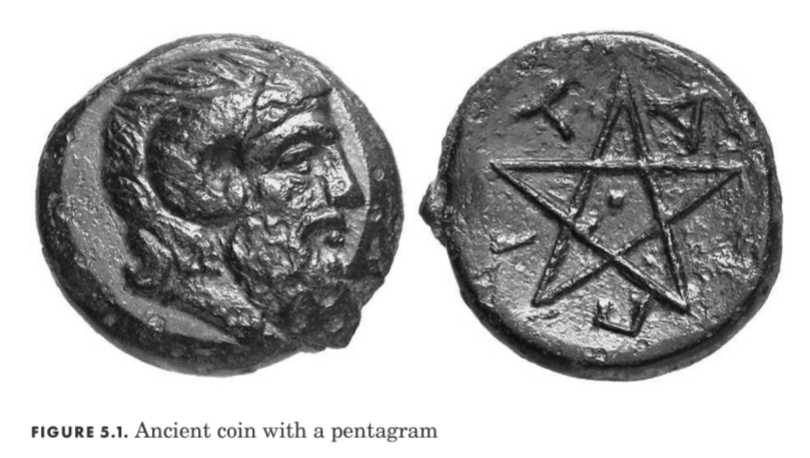
Credit for image to Maor, Eli and Jost, Eugen. "5 The Pentagram". Pentagons and Pentagrams: An Illustrated History, Princeton: Princeton University Press, 2022, pp. 58-70. https://doi.org/10.1515/9780691238555-006
Symbols of “witchcraft” are common in seasonal decorations, but do not all have origins in what we identify today as witchraft. If you’ve met someone who identifies themself as a witch they are likely a practitioner of New-Age Wicca, which is a common religious practice today that uses the pentacle, a 5-pointed star enclosed in a circle. This symbol is widely used in Halloween decorations and horror media to represent witches and particularly in relation to satanic rituals. However, the pentacle or pentagram has origins in a 3000 year-old Mesopatamian symbol that Pythagoras and his followers adopted to identify their membership. At the time, ancient Mesopotamia used the star as a common decoration on coins as a sign of good luck, virtue, and fortune, which was quickly adopted during the Hellenistic era before the rise of the Roman Empire (Maor, Eli, & Jost, 2022). It has since been popularized via the Rider-Waite tarot deck, in which it serves as a suit. Tarot was readily adopted by many regardless of religious alignment as a divination tool during the colonization efforts of the Hellenistic period and into the current day. The concept of magic and rituals is not distinct to any singular culture.
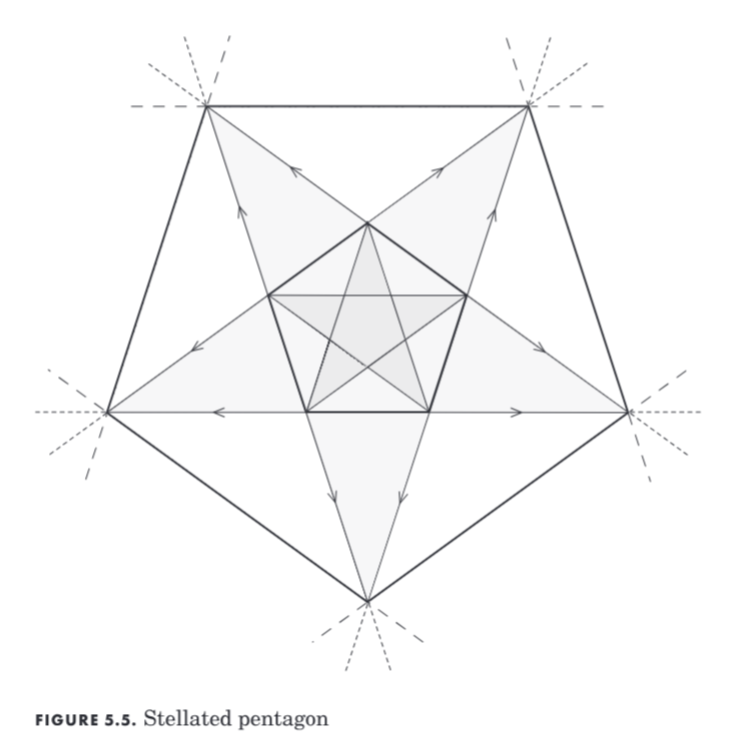
Credit for above image to Maor, Eli and Jost, Eugen. "5 The Pentagram". Pentagons and Pentagrams: An Illustrated History, Princeton: Princeton University Press, 2022, pp. 58-70. https://doi.org/10.1515/9780691238555-006
Plants of witchcraft: what you know, what you think you know, and the truth.
Witches, or “wise women,” were often herbalists, midwives, and healers. They held great power to heal and help, and as Uncle Ben told Peter Parker, “with great power comes great responsibility.” This can easily make others in the community fear them for their ability to keep death and pain at bay. The power to heal can also be power to harm, as the saying goes, “the dose makes the poison.” Plants used to heal can also be plants used to harm, poison, or even kill based on how much is used or how it is applied. Herbalism, folk medicine, and traditional healing practices are not to be taken lightly, and certainly not disregarded as trivial. Humans have and continue to depend on plants for our survival. A majority of our modern medications have been synthesized or processed from plants. The opium poppy (Papaver somniferum) is the source of morphine, codeine, oxycodone, and other opioids, while white willow (Salix alba) is the natural source of salicin, the main ingredient in Aspirin.
“The dose makes the poison.” - Theophrastus Bombastus von Hohenheim, 1538
So where do the witchy ingredients come from? What ingredients did witches use? We have all heard the phrase, “eye of newt,” used as a potion ingredient, and some may even know it as a pseudonym for mustard seed, popularized in the Victorian era by Shakespeare’s play Macbeth. So who is the plant in reference to? That is unclear but is likely one of the following three species; White mustard (Sinapis alba), brown mustard (Brassica juncea), or black mustard (Brassica nigra). However, why give a plant such a name? It could be for flair or to help one remember the ingredient more readily, or possibly to encode the information for non-herbalists. But why hide the truth in something as strange and clearly incriminating for the crime of witchcraft? Was this even a real ingredient used by healers at the time? This remains unclear, and it should be noted that actual animal parts have been used in traditional healing traditions all over the world, so it is entirely plausible the “eye of newt” was literal. It also could have been mustard, but the sources state that this phrase was not common until after Shakespeare’s play.
Fun Fact: Bumblebees pollinate Wolfsbane (Aconitum variegatum) which gets its name from its use to poison wolves.
Other plants directly correlated with witches include belladonna (Atropa belladonna), henbane (Scopolia carniolica), wolfsbane (Aconitum variegatum), jimson weed (Datura stramonium), hemlock (Conium maculatum), and mandrake (Mandragora officinarum). This is from their applications in flying ointments, which are covered in depth by ethnobotanist Dr. Mark Plotkin on episode 8 of season 1 of the Plants of the Gods podcast. I highly suggest you give it a listen to learn more amazing facts about these plants! Henbane and belladonna are members of the Solanaceae family (including tomato and potato) and contain atropine, an alkaloid that induces hallucinations and even seizures. They also result in dilation of pupils and were used by women to appear more attractive and alluring in the Italian Renaissance. Plants with names including “-bane” are associated with killing, coming from the Middle English use of bane to refer to a person, animal, or thing that kills. So wolfsbane was used by people to poison wolves in villages to protect livestock and has been used by different cultures for arrow poisons.
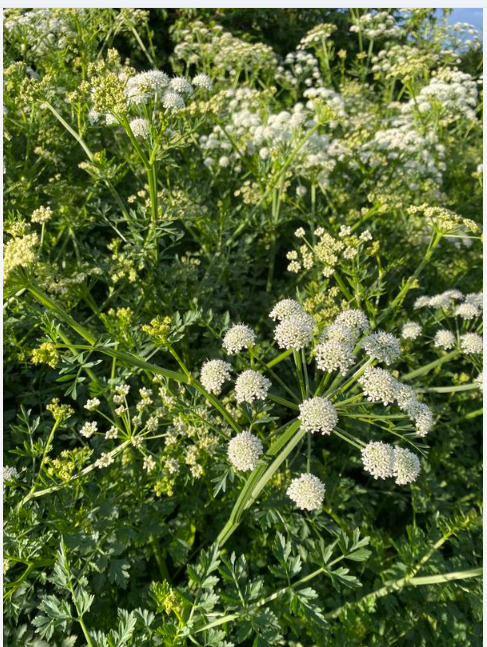
the above image of Conium maculatum is from iNaturalist contributors, iNaturalist (2026). iNaturalist Research-grade Observations. iNaturalist.org. Occurrence dataset https://doi.org/10.15468/ab3s5x accessed via GBIF.org on 2026-11-03. https://gbif.org/occurrence/5133397944
Mandrakes are also a member of Solanaceae and contain alkaloids similar to atropine that result in hallucinogenic effects. Many individuals are familiar with this plant from its appearance in Harry Potter. European herbals clearly document methods of collecting this root, known to emit a shrill cry that can kill you. The origins of this belief are unclear and where it stems from, but some state it is a form of the plant protecting itself. Mandrake was used in many magic spells or medicinally due to the resemblance of the root to limbs or the human form. This concept is the Doctrine of Signatures, where if the plant part resembles what it is used to treat. This was common healing beliefs in the 16-17th Century when Paracelsus, the Father of Toxicology and influential to modern medicine through his studies of Hermeticism and clinical diagnoses. According to the Doctrine of Signatures, plants that exude a red sap could be used to treat blood conditions, which was important at the time, as it was ascribed to the ideology that most illnesses were due to an imbalance of the four humors of the body: blood, phlegm, black bile, and yellow bile. He is credited with great knowledge of medicine and was a prominent physician during his time for his investigations into folk medicine.
Day of the Dead, Samhain, & their connections to Halloween
Samhain (pronounced SOW-in or SAH-win) is a Gaelic holiday celebrated at the end of October to mark the end of the harvest season. Originating from Ireland and still celebrated there, in Scotland, and on the Isle of Man. This shares the concept of a thinned veil between the world of the living and the dead that is also seen in Día de los Muertos. The dead ancestors would visit the home, and offerings of food and drink were left outside for them. Current-day celebrations by Neopagans often land on Halloween, October 31st - November 1st. Originally, carving turnips rather than pumpkins was a common activity for children.
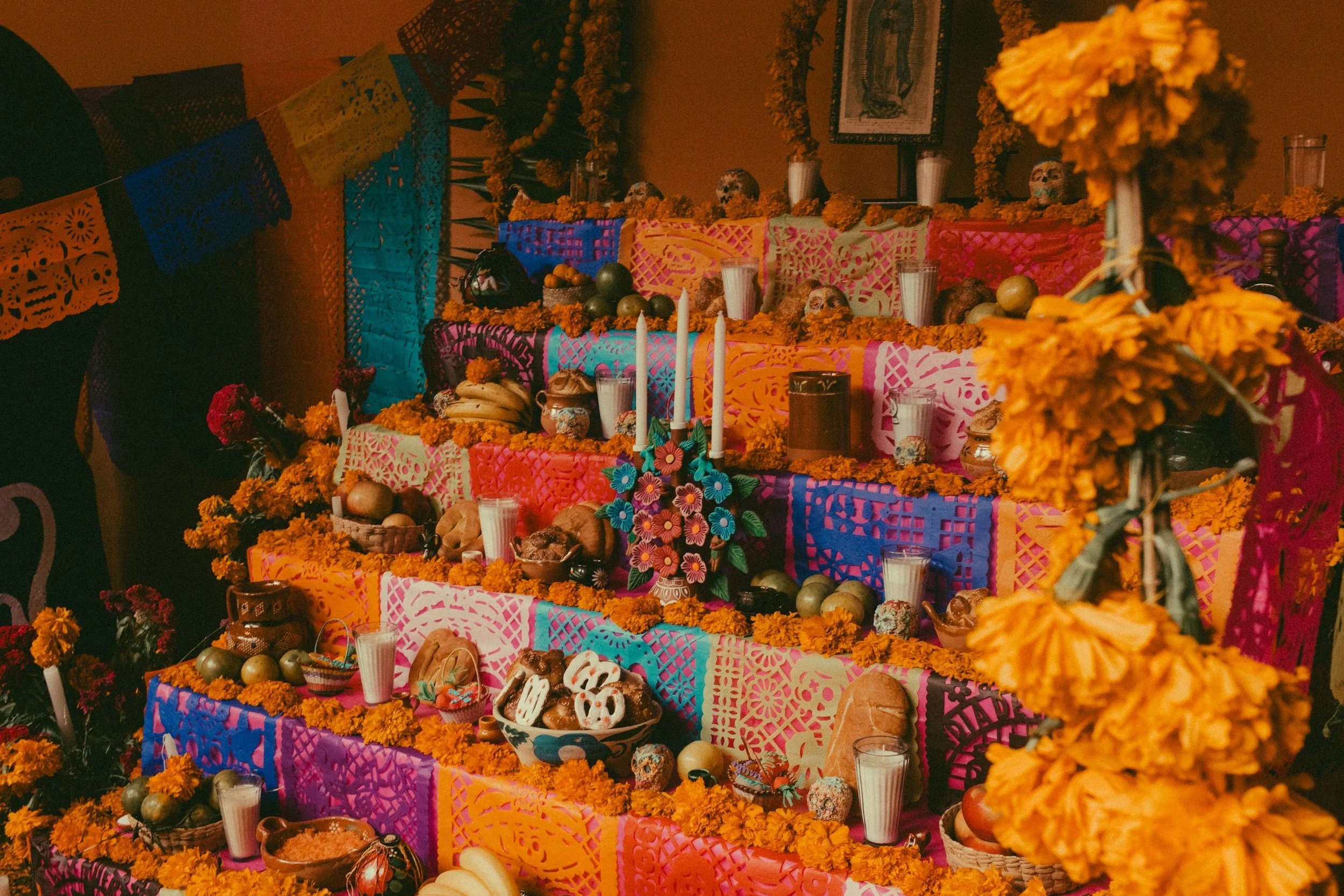
An elaborately decorated ofrenda for Día de los Muertos with marigolds, food and many candles.
Another holiday associated with Halloween is Día de los Muertos, or Day of the Dead, which has a rich historical context that should not be appropriated, as it is a celebration of lost loved ones specific to Mexico and considered a sacred practice by mestizo, Maya, Aztec, & other indigenous Americans. The holiday is celebrated to honor deceased loved ones, similar to Samhain. Many families gather in the cemeteries to decorate the graves of their ancestors. They often decorate using intricately cut paper, marigolds, and skulls. The sugar skulls, or calaveras, is a popularized symbol from this tradition, but it was originally prepared using amaranth, known as huihuitl in Nahuatl and Mayan. This plant has been cultivated in the Americas for thousands of years and was once an important food plant for many groups. The skulls are often placed on ofrendas (altars) to honor deceased loved ones on Nov 1-2nd. There are other offerings of foods and drinks, candles, and images of the deceased.
It should be noted that similar practices do not correlate or connect the two things. Honoring our ancestors and our relationship with the dead has been and continues to be an interesting cultural practice of our species. However, we are not the only species that honors the dead, as elephants are also reported to exhibit behaviors similar to grieving and mourning loved ones. Understanding our relationships with lost loved ones as survivors can be viewed as an evolutionary biological question but also as a cultural one. But we learn new things every day, and grieving doesn’t seem to be exclusive to our human experience, widening our understanding and the questions scientists, anthropologists, and others studying death and related practices of dealing with our dead. As for Halloween, it is best described as a modern amalgamation of many cultural practices popular across the globe. Assuming or attributing Halloween to a single cultural tradition is likely unwise and inappropriate, as it is celebrated by many different cultural groups all around the world today.
Stay spooky, stay curious, and ask the weird questions!
References
Castillo Farfán, Karen. “Decoding The Food And Drink On A Day Of The Dead Altar.” NPR, 29 Oct. 2014, https://www.npr.org/sections/thesalt/2014/10/29/359829045/decoding-the-food-and-drink-on-a-day-of-the-dead-altar. Accessed 3 Nov. 2026.
Magic plants and witchcraft video. Youtube. https://www.youtube.com/watch?v=cZMenUMaM68. Accessed 3 Nov. 2026.
“The Depths of Animal Grief.” PBS NOVA, 8 July 2015, https://www.pbs.org/wgbh/nova/article/animal-grief/. Accessed 3 Nov. 2026.
Matossian, Mary Kilbourne. “Bewitched or Intoxicated? The Etiology of Witch Persecution in Early Modern England.” Medizinhistorisches Journal, 1983, p. 33–42, : http://www.jstor.org/stable/25803730.
POWO (2026). "Plants of the World Online. Facilitated by the Royal Botanic Gardens, Kew. Published on the Internet; https://powo.science.kew.org/
Retrieved 31 October 2026."Maor, Eli and Jost, Eugen. "5 The Pentagram". Pentagons and Pentagrams: An Illustrated History, Princeton: Princeton University Press, 2022, pp. 58-70. https://doi.org/10.1515/9780691238555-006
