Meliponines, Maya, & Mexico
I just returned from my trip to Mexico and had a lovely experience in Merida. The music, food, and architecture are rich in history and diversity. I was enthralled by it all. But what I was most excited for was learning more about meliponines (stingless bees), the Maya culture, and the rich history of both in Mexico. I was not let down thanks to my host, Dr. Ruben Guillermo Medina Hernandez, and his lovely family.
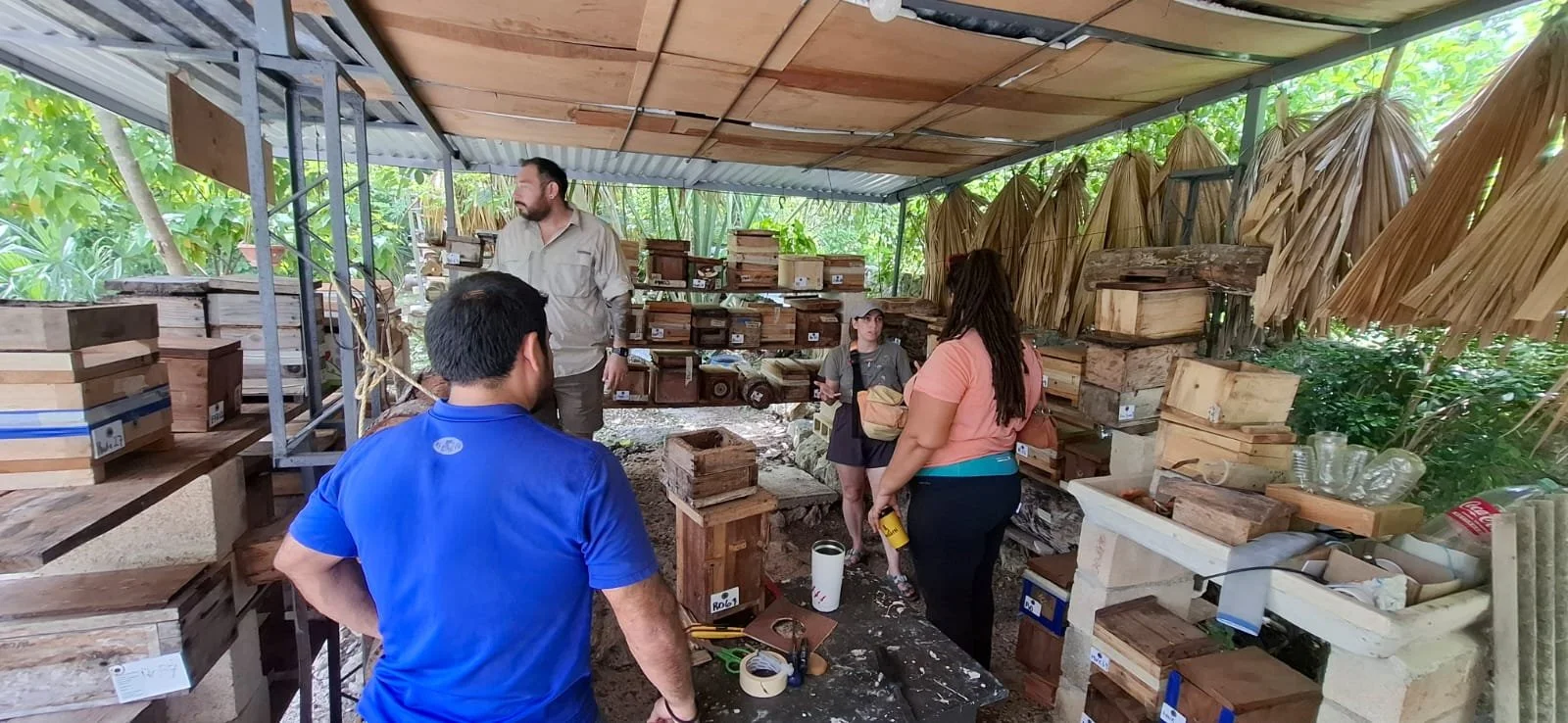
My visit to a meliponario with local researchers and a friend.
Photo Credit to Dr. Ruben Guillermo Medina Hernandez
Meliponiculture, the practice of stingless beekeeping, is central to my research. Understanding the historical context of the practice helps inform the ecological past and future of the management of local bees. Many people of the Americas assume that Apis mellifera is native; however, the European honeybee (EHB) is naturalized to the American landscape. Central and South America also face the challenge of the hybrid Africanized honeybee (AHB), known for being more defensive and known as the “killer bee” by many. However, I know many beekeepers in Belize who have successfully and safely managed colonies of these hybridized bees, and even removed and relocated swarms for the safety of locals, and are working to educate the public on the role of these insects. This has profound impacts on the local perceptions of bees, even stingless bees.
The tale of “Africanized” bees is what I like to call the insect equivalent of Jurassic Park. In an effort to breed a better bee for the tropics, Dr. Warwick E. Kerr in Brazil, 1957, had set his mind to breed an insect that could tolerate the hotter environmental conditions and be more resistant to pests. Unfortunately, there was a mistake; one of the hybrid subspecies of honeybees escaped into the jungles and spread from there. But the local beekeepers of Belize quickly adapted and learned to manage these more defensive colonies and are working hard to safely relocate them away from communities for the well-being of all. This makes my research even more exciting as I get to hear personal tales of how beekeepers have learned and adapted to many different challenges.
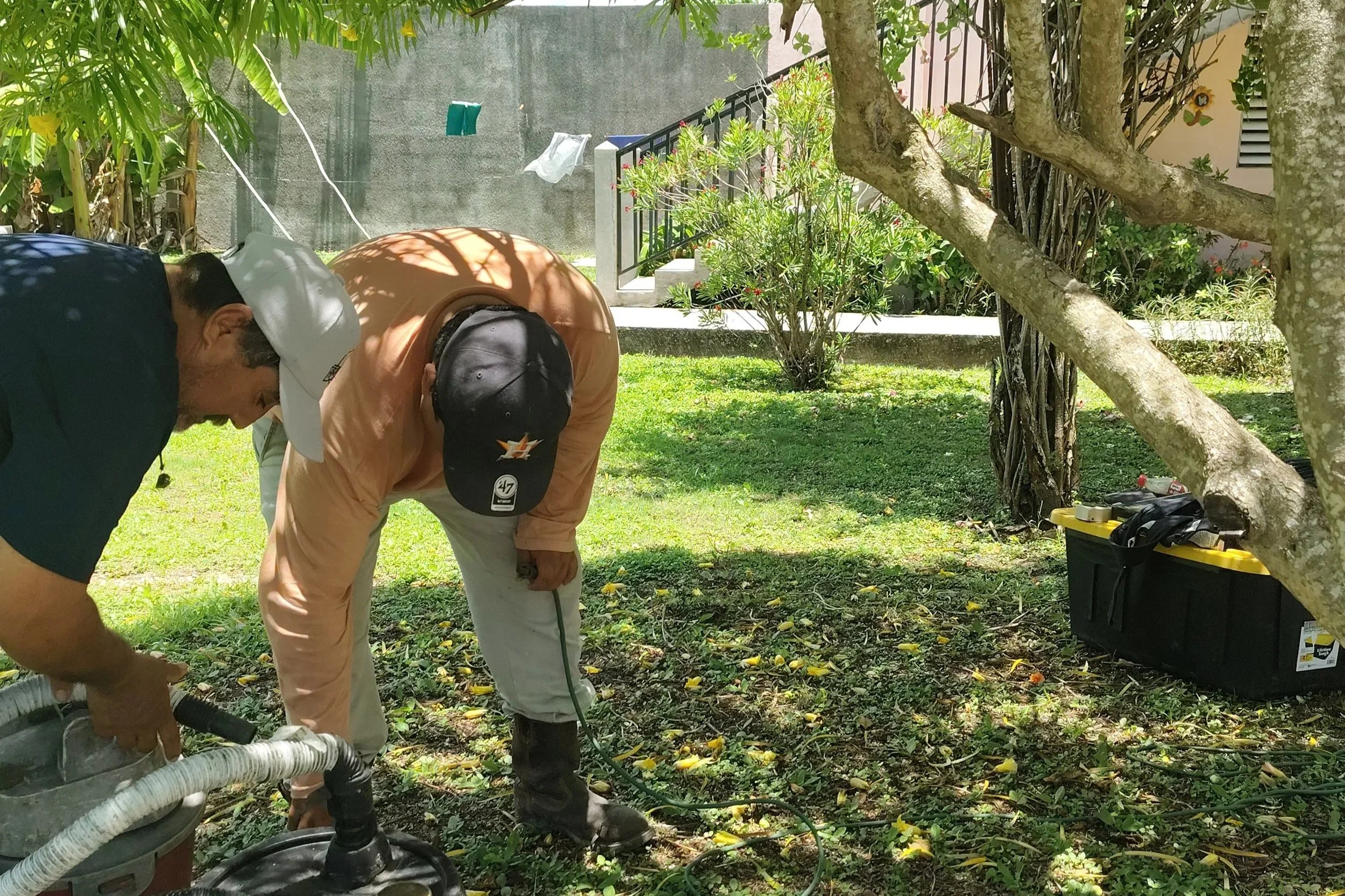
Felix and Moises, two members of the Esquivel family Beekeepers of Corozal, Belize removing a swarming colony of AHB from a yard prior to a birthday celebration for a local kid.
However, we cannot blame Dr. Kerr entirely, as Apis mellifera was introduced centuries earlier by colonists seeking to start anew in the Americas. While humans have clearly had a significant impact on the landscape, much remains unclear about the impacts of the introduction of Apis mellifera on American ecological webs, in particular native botanical communities. Scientists have yet to determine whether the species should be classified as invasive or simply naturalized. There are many reasons for this, and it should be seriously considered since many families base their livelihoods on this species. The label ‘invasive’ carries a heavy weight with many moral and ethical beliefs attached. Regardless, I am particularly interested in the impacts of this introduced bee on the pollination ecology of Belize and how it has shaped the Maya historically.
The Maya have been exceptional beekeepers before the colonization of the Americas by the Europeans. Despite the violent erasure of traditions the Europeans imposed on the Maya, it is a powerful story of resistance as well. Both the Spanish and British attempted to colonize the Maya and severely struggled, but the damage was done. The Caste Wars had a profound impact by displacing the Maya, which is a large and diverse language group, not a single culture. Through violent colonization, religious conversion, and forced displacement over centuries, the Maya people and their culture are difficult for many scholars to piece together into a cohesive image. That’s why I spend time visiting libraries, museums, and speaking to cultural knowledge holders; so I can get a clearer picture of the traditional ecological knowledge that has survived and likely adapted to current day.
One of the few surviving codices on the Maya dedicates a large portion to stingless beekeeping; therefore, this bee had a valuable role in their society. The puggish melipona bee glyph, depicted with great detail, including buckteeth to resemble mandibles and even striped hairy abdomens, reveals the level of importance these insects held in the eyes of the Maya. With over 100 species of stingless bees in the Americas, it is believed that this represents Melpiona beecheii, better known by the Maya and local meliponiculturos as xunan cab or colel cab. In the Northern Mayan language, these terms translate to “royal lady bee,” which further confirms the important ethnoecological relationships between stingless bees and Maya. But through my work, many state that this bee is no longer common in the villages of Belize. Elders describe this bee but state that they’ve not seen it for decades due to deforestation and common agricultural practices. Protecting these bees requires a large number of supporters from diverse backgrounds due to the many factors that are impacting the abundance of native bee populations.
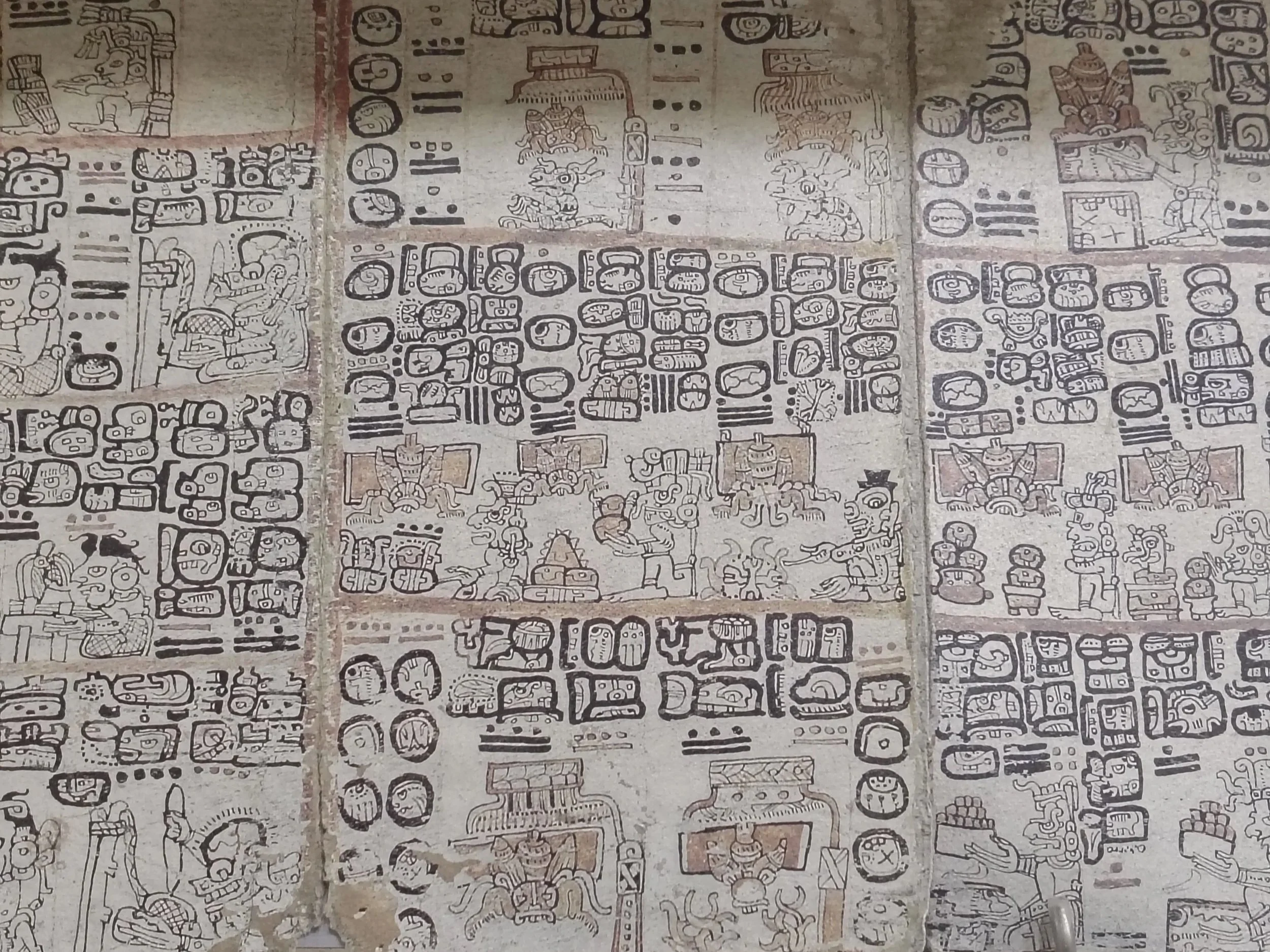
A panel of the Madrid Codex (aka Tro-Cortesianus Codex) replica from the Gran Museo del Mundo Maya in Merida, Mexico, depicting ceremonies and deities involved in the management of stingless bee colonies.
Meliponines require food resources located close by with enough flora to survive the rainy season, during which they cannot fly. This is impacted by deforestation due to urbanization, cattle farming, and timber harvesting. Many of the beekeepers I speak with in Belize describe negative impacts of agrochemicals, particularly on the stingless bees, which seem to be more susceptible to the effects based on studies to date. As native bees, they likely played a role in the domestication of particular food crops and the “ancient” agricultural systems of the Maya over 3, 000 years ago. Their ritual significance may also explain why they were managed in such large numbers in Maya sites like Cerro (109 disks) and Cozumel (255 disks) and why the tradition persists to this day (Paris et al., 2020). The archeological evidence for stingless beekeeping, or meliponiculture, comes from limestone disks that were used to cap the ends of the log hives. In the hot, humid environments, the log quickly degrades, leaving little to no other traces to be found today.
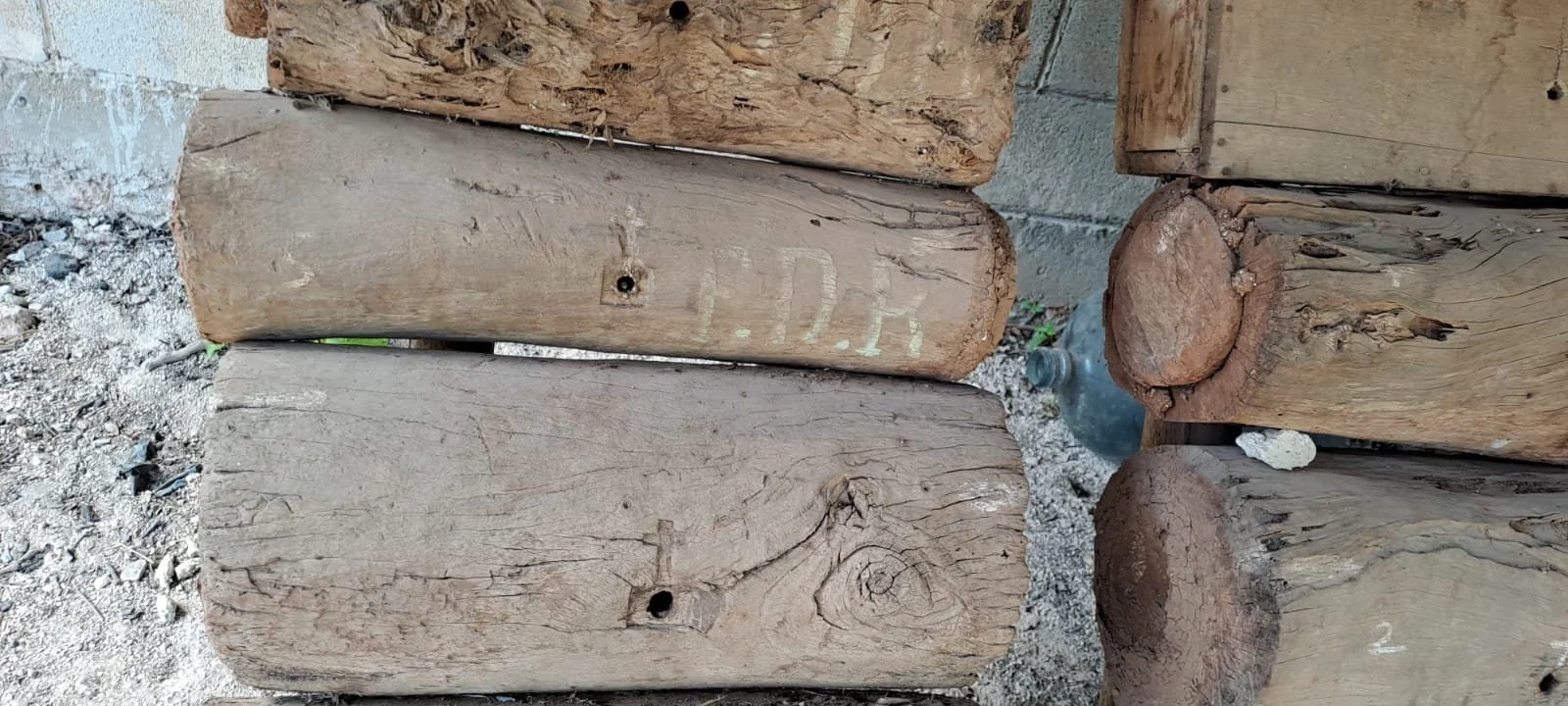
Log hives, called jobones in Spanish, mimic the traditional management techniques of meliponiculture (stingless beekeeping). The cross above the entrance was originally described as equal on all sides, representing the four cardinal directions and the bacabs, or deities associated with them, likely to protect the bees traveling from and to the hive.
Photo Credit to Dr. Ruben Guillermo Medina Hernandez
When you think of bees, I’m sure your brain immediately jumped to honey. Honey was an important sweetener before the introduction of sugar cane to the Americas. Sugar quickly replaced honey as it is produced faster than bees can produce honey. But bees are more than that, and historically have played a vital role in society for a different hive product. Wax has been used for many items used daily, and for the creation of metalworks and even sealing containers (Paris et al., 2020). One of the most valuable products was candles, vital for everyday use before the invention of electricity. The religious elites of Maya society also depended on meliponine honey for the production of balche, a mead-like drink consumed during ceremonies.
Another extremely valuable product of bees, often overlooked, is crops. Pollination services provided by stingless bees were vital for feeding the population. Many plants from the Americas utilize insects for pollination; therefore, fruiting crops benefit from bees. One of these plants is Annatto or Achiote (Bixa orellana), used as a red food coloring or spice for local dishes. It is also used in many other products sold globally now, including makeup. Another delicious product I can see growing in many yards during my field season is mangos. Mangifera indica is a member of Anacardiaceae, the same family as cashews (Anacardium occidentale) and poison ivy (Toxicodendron radicans), often ignored by EHB and AHB, but extremely popular with meliponines (Heard, 1999). So if you want to grow mangos, let the meliponines come.
And that’s not all, but I’ll save it for another post for another day. My trip to Mexico to study the Maya and meliponines was a fruitful journey and a fulfilling experience. I made connections with local biologists, beekeepers, and, of course, the bees. Seeing firsthand the experimental management techniques some of them are trying to conserve bee diversity and Maya tradition was truly inspiring. Best wishes from Belize to my fellow researchers and bee-minded folks in Mexico, until next time!
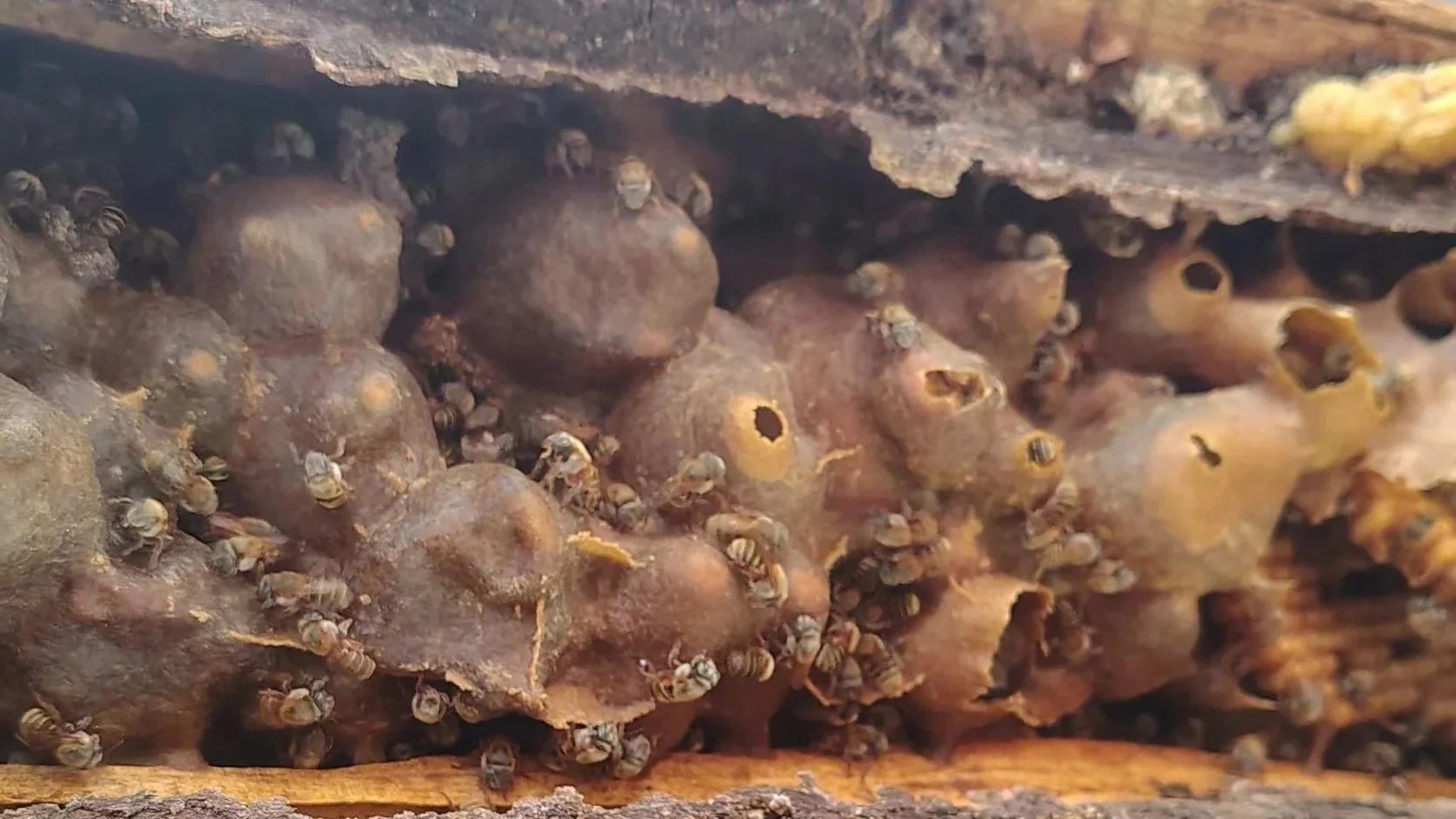
Colony of Melipona beecheii housed in a traditional log hive managed by a local melipinario just outside of Merida, MX.
References
Heard, T. A. (1999). The Role of Stingless Bees in Crop Pollination. Annual Review of Entomology, 44(1), 183–206. https://doi.org/10.1146/annurev.ento.44.1.183
Paris, E. H., Castrejon, V. B., Walker, D. S., & Lope, C. P. (2020). The Origins of Maya Stingless Beekeeping. Journal of Ethnobiology, 40(3), 386–405. https://doi.org/10.2993/0278-0771-40.3.386
