The Value of Fieldwork & the Power of Food
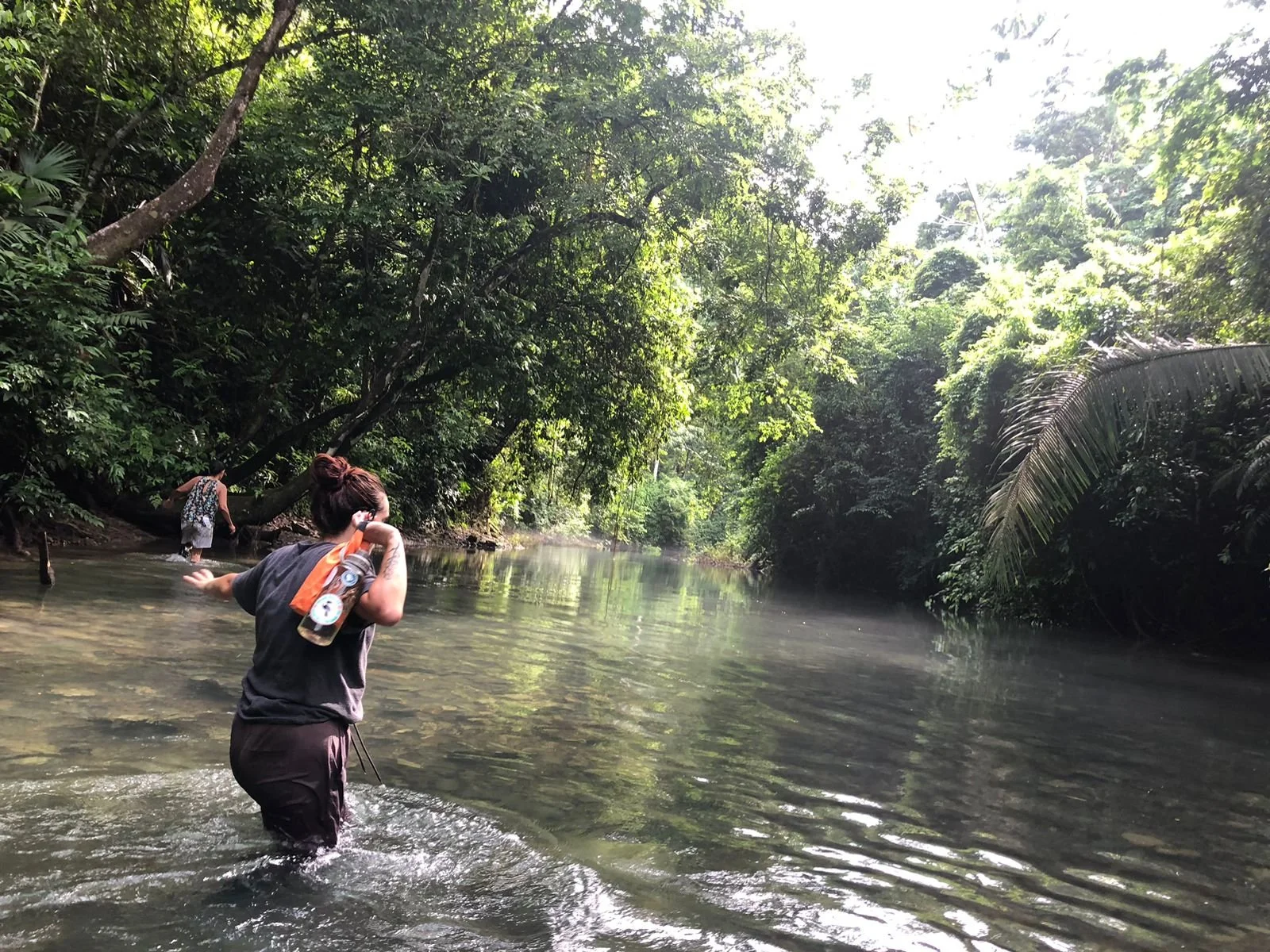
Me wading across the river in one of the villages in search of stingless bees.
The current cold weather in NC has me missing the humid climate of Belize. I yearn for the sunshine, tropical birdsong, and the earthy smell of the jungles. I want nothing more than to return to the villages of Belize, my home-away-from-home. I thoroughly enjoyed my time staying with the Maya people to learn as much as I possibly could. I cooked, ate each meal, slept under a thatch roof, and spoke as much Q’eqchi’ as I could, all in an effort to truly understand what life is like for the Maya today. Since my research is on the traditional knowledge of stingless beekeeping and the ecological implications of it, I need to understand how my work can impact the communities and benefit them.
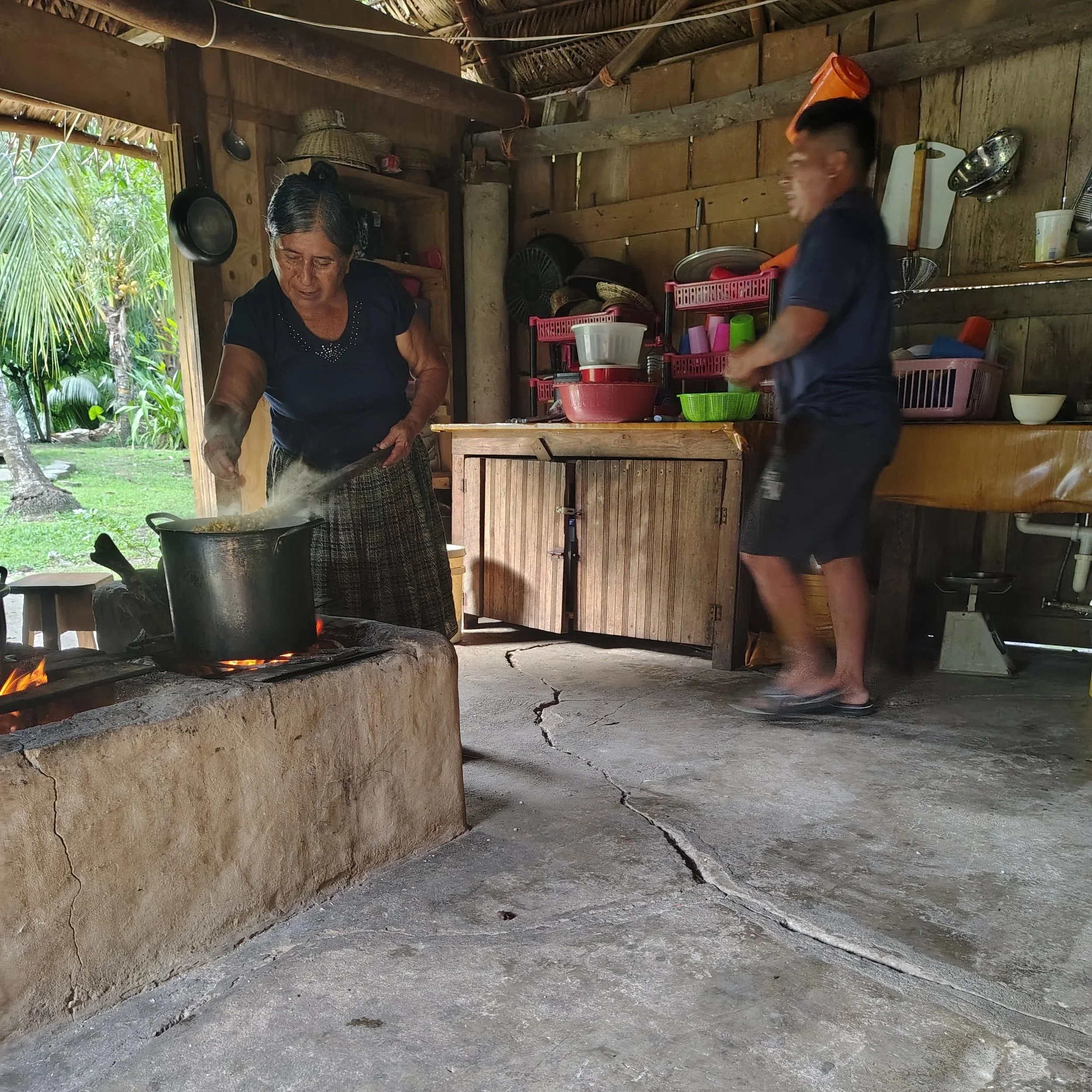
Mrs. Makin preparing a pot of corn for tortillas on the fire in the kitchen.
My work in the field differs from most conservation biology and anthropology research since I combine methods from both fields of study. Trained as an ethnobotanist, I was taught to engage directly with the communities I am studying. This separates ethnobotany from classic anthropology, as the scientist becomes a participant to fully understand what is being shared with us as Mark Plotkin describes in his book Tales of a Shaman’s Apprentice. Because I embrace this, I have learned so much more than I ever could on my own, attempting to remain an ‘objective’ researcher.
I sincerely miss the experience of directly interacting and learning from the Maya, the bees they tend, and the plants they live among. Being in the office, reading about things, only takes one so far. To live it, breathe it, provides a deeper understanding, a greater form of knowing than reading a book ever can. And that’s coming from an avid reader.
“As an ethnobotanist, I was taught to engage directly with the communities I am studying. ”
But what I miss the most is probably the amazing home cooking of the local Maya. I miss the taste of warm corn tortillas, the spicy zing of ‘ik (chili pepper) in the caldo, and the sweetness of fresh mangos. I find myself deeply craving the flavors of Q’eqchi’ cuisine and the amazing people who shared it with me. Celini Logan Nesbitt snacking on starfruit with me. Cerilia Chee teaching me how to prepare fresh cacao for a traditional drink. Baking with all the women of the Makin family. Laughing with Adel and the kids when I failed to properly eat pur (freshwater snails) and she had to help me. Food brings people together and teaches us so much about each other.
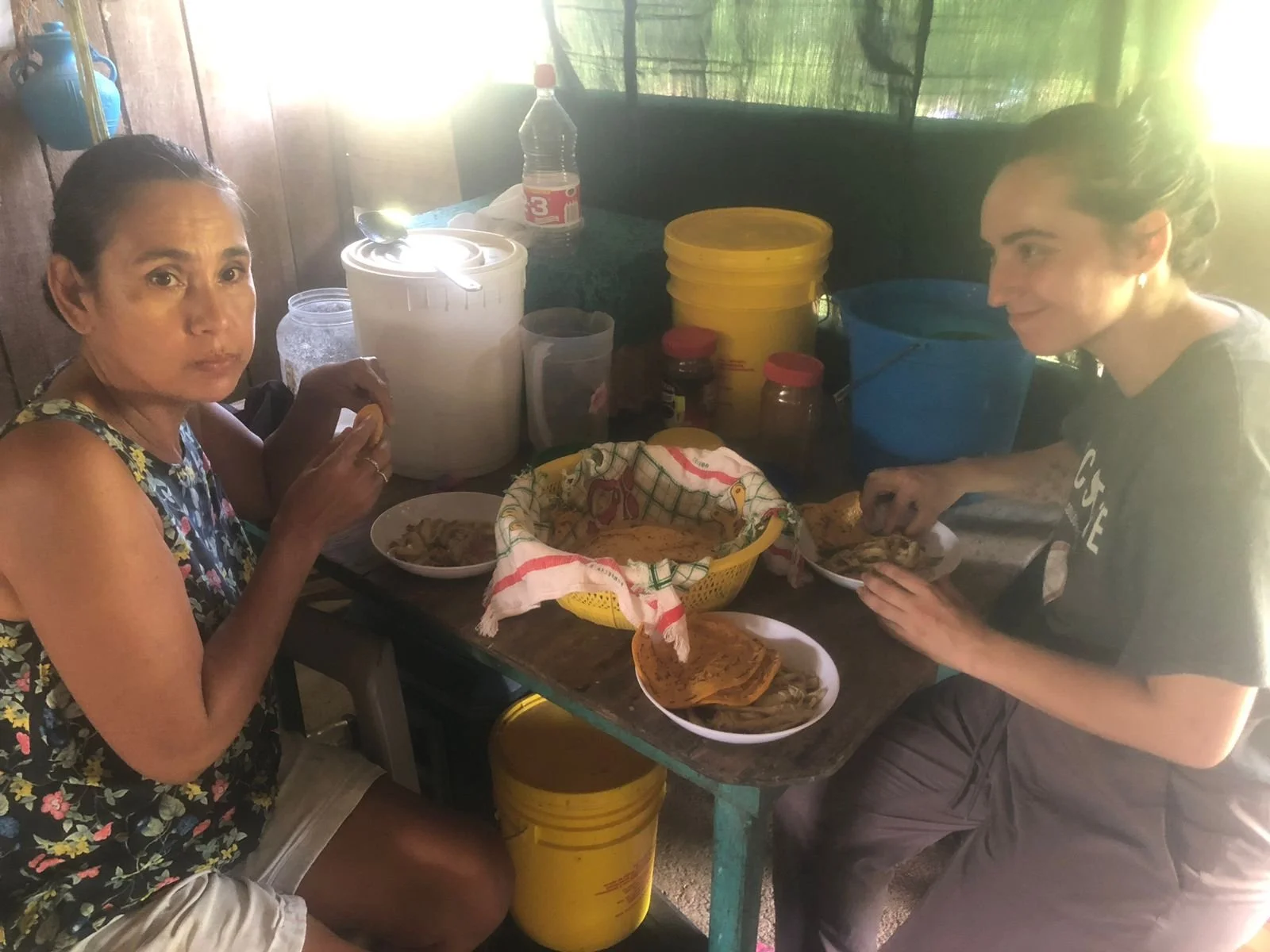
Celini & I sharing a home-cooked Belizean meal prepared by Cerilia’s mother in the village of San Pedro Colombia, Toledo, Belize.
