Plants of Belize: Momordica charantia
Bitter melon, Sorosi, goya, Balsam pear, bitter squash, Momordica charantia. Many different ethnic groups of Belize utilize this plant to ‘cleanse the blood’ and treat for parasites. The Rastafarian peoples (Arzu & Thiagarajan, 2016), My own host here in Orange Walk told me of how his mother would make him and his siblings drink a tea made from the leaves to get rid of intestinal worms.
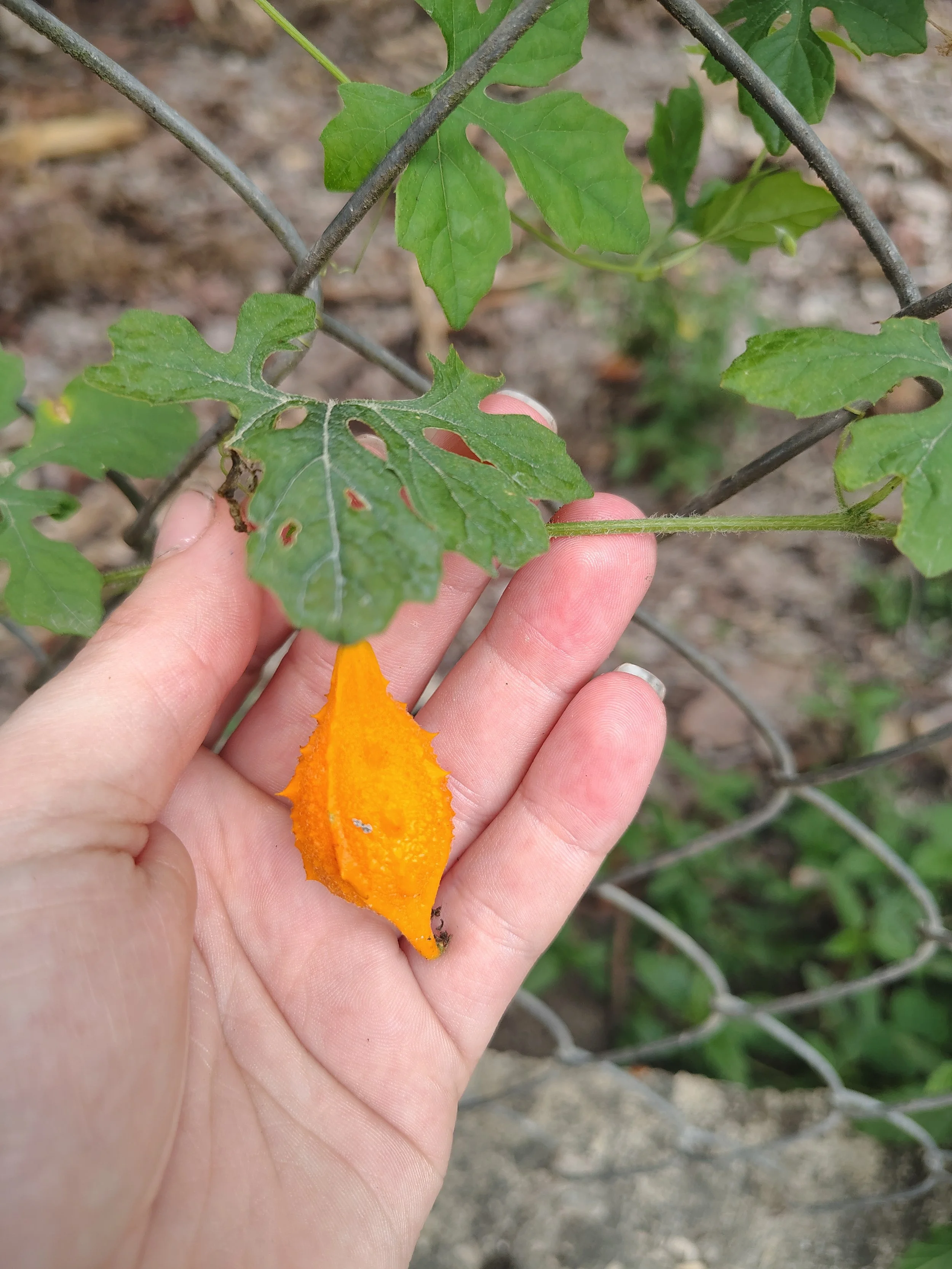
The bright fruit of bitter melon looks almost alien with the spiny projections on the fruit’s outer skin and flamboyant color.
This plant has as many uses as it does names, among all the different ethnic groups of Belize. All parts of the plant are used for a wide variety of medicinal uses. It is described to treat for diabetes, dysentery, liver problems, flu and colds, and even as an aphrodisiac. However, healers and medical professionals warn that it can have abortive results. As with all natural medicines or remedies, be sure to consult your doctor before taking anything. Contraindications are extremely important to be informed of with all medicines, just because something is natural does not make it safe. Nature can be dangerous.
If you’re interested in trying it, start by finding it at your local grocery store and cooking up some bitter melon. The taste is described as bitter cucumber or bell pepper due to high water content. I was first introduced to the plant last summer by the children of my research assistants. They led me over to a lush vine loaded with these strange fruits and offered me one to eat but told me to only eat the sweet pulp and spit out the seeds. Which wasn’t much of a snack considering the fruit had very little pulp coating each of the seeds.
Despite the many uses across all cultures of Belize, it is not a native plant to the region. Momordica charantia is a member of Cucurbitaceae originally from Asia and Africa. It is believed to have been introduced to the Americas through the slave trade (Mallory, 1991).
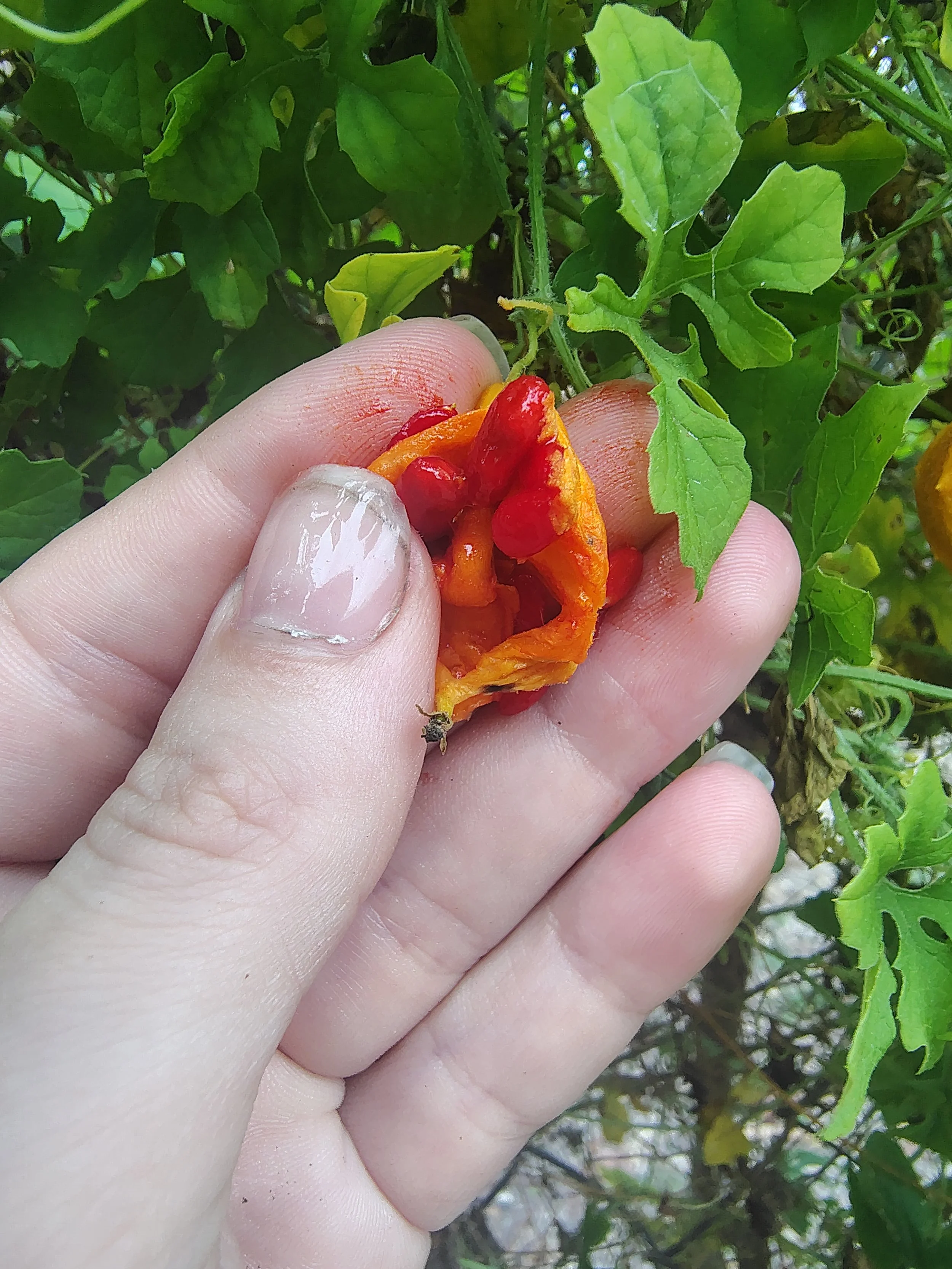
Fruit of M. charantia opened to reveal the red pulp covering the seeds.
The leaves are distinct, making the vine easy to identify even without the small yellow flowers or unique fruits. The leaves are palmately dissected and accompanied by thin tendrils to help it climb along chain-link fences, other plants, and even houses. It is easily spread by seed as they are attractive to birds. But I am more interested in the pollination than seed-dispersal…
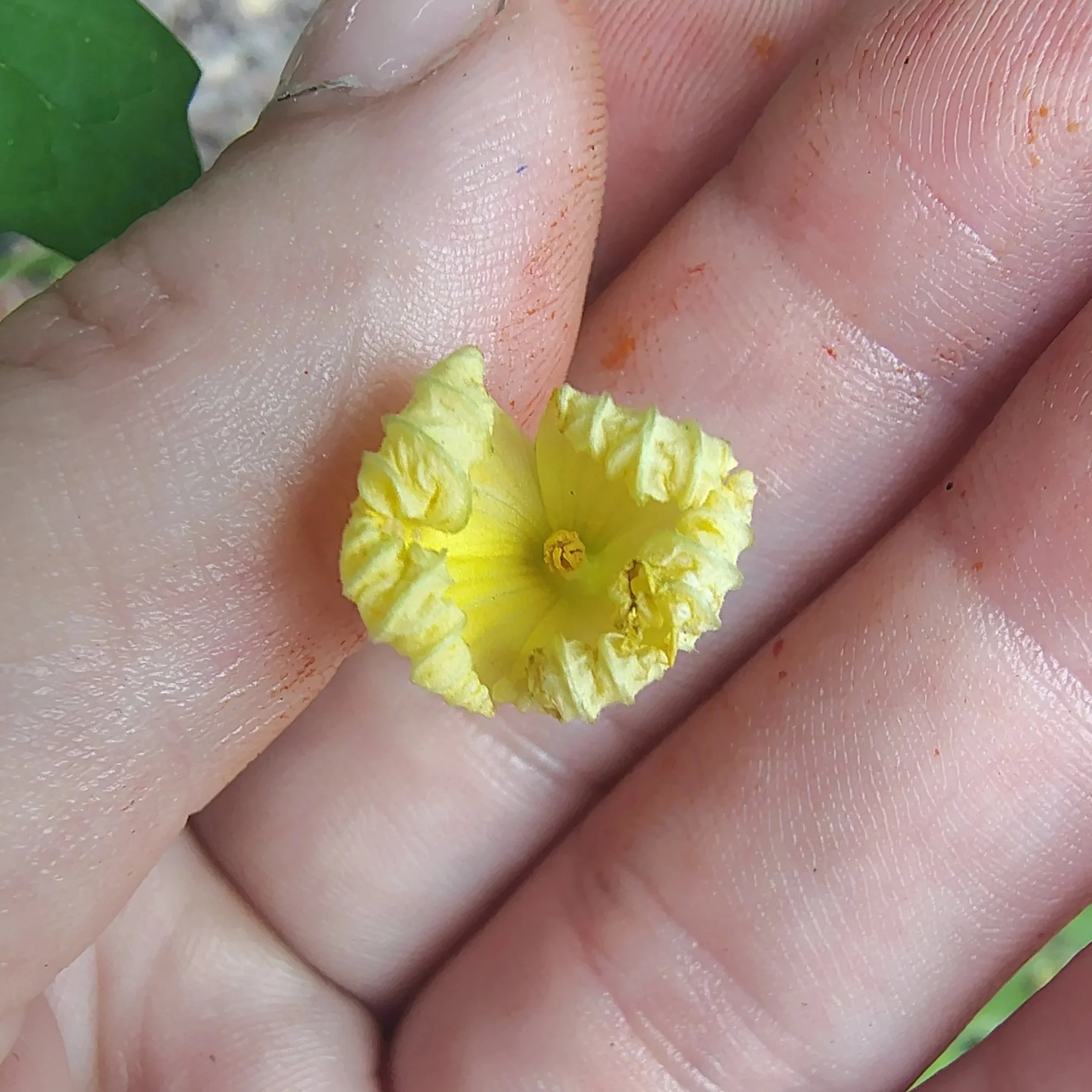
Close up of the small flower after a day under the blazing sun. The five petals are curled inward with the pollen still visible on the anthers.
I observed local stingless bees visiting the flowers while ants collect the sweet, ruby pulp from the open fruits. The flowers only last for a day, opening early in the morning with the rising sun. Many flowering plants are pollinated by bees, beetles, flies, and many other insects. Entomophily is rather common in many food plants around the world, particularly members of the cucumber family (Cucurbitaceae), as they are monoecious, so the male and female flowers are formed on separate plants. This is where insects come in; they visit flowers and carry the pollen from one to another, and accidentally deposit pollen during these visits. When the pollen of one bitter melon plant reaches the flower of a female plant, the magic can happen! Fruits are produced, and the next generation of plants can have a chance at life.
References:
Arzu, Y., & Thiagarajan, T. (2016). Medicinal plants used by the Rastafarian community in Belize. International Journal of Herbal Medicine, 4(3), 15–20. https://www.researchgate.net/profile/Thippi-Thiagarajan/publication/303364300_Medicinal_plants_used_by_the_Rastafarian_community_in_Belize/links/573e145d08ae298602e6dbf3/Medicinal-plants-used-by-the-Rastafarian-community-in-Belize.pdf
Mallory, J. M. (1991). Common medicinal ethnobotany of the major ethnic groups in the Toledo district of Belize, Central America (Order No. 1343978). Available from ProQuest Dissertations & Theses Global. (205386073). https://proxying.lib.ncsu.edu/index.php?url=https://www.proquest.com/dissertations-theses/common-medicinal-ethnobotany-major-ethnic-groups/docview/205386073/se-2
