Difficulties in Beeing
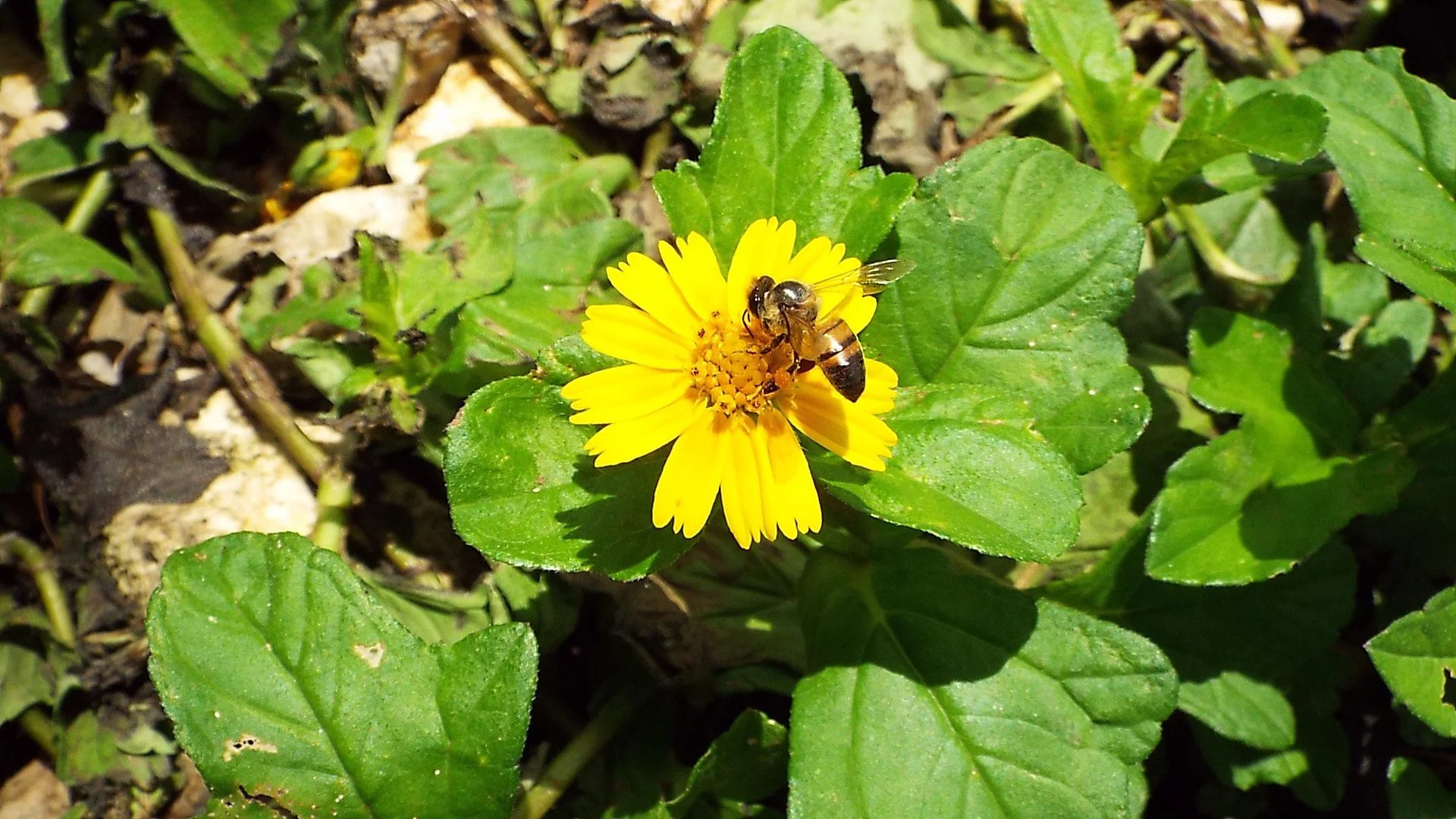
European honeybee (Apis mellifera) on a flower of Sphagneticola trilobata in Toledo, Belize.
When I say I study bees, many people get excited and ask if I keep my own bees, assuming I work with the kind that make the honey we buy in the grocery store or local farmers’ market. But that bee, Apis mellifera, isn’t native to the Americas. It was introduced to most of the world from its home-range of Europe. I study meliponines, or stingless bees, a unique group of bees found all around the world, but only along the equator, where it is warm enough for them. I specifically study the species found in Central America that have been (and still are) managed by the Maya people of Belize.
Meliponines are more closely related to bumblebees but lead a lifestyle similar to that of Apis mellifera, the European honeybee. Both have colonies headed by a queen that lays all the eggs, serving as the mother-in-charge. There is a caste system with workers who have different jobs based on their age, but very rarely reproduce, as that would incite a coup. And, of course, they make honey. That delicious golden liquid so many of us have lusted after for generations. But that’s where the physical and behavioral similarities end; meliponines — stingless bees— are fairly interesting but remain under researched by scientists. But they are starting to find the limelight.
Stingless bees are described as such since most do not utilize a stinger (with rare exceptions) and instead defend their colony by fiercely biting predators with strong mandibles. This makes them fairly easy to manage compared to the stinging counterparts so many mistake them for. Meliponines are also significantly smaller than the European honeybee, roughly one-third of the size. But that doesn’t stop them from much. The smaller size can actually serve as an advantage at times since they are capable of accessing different flowers for food and smaller body size allows them to tolerate higher temperatures. In a world where the days are getting hotter, this is a great benefit. But they have their limitations.
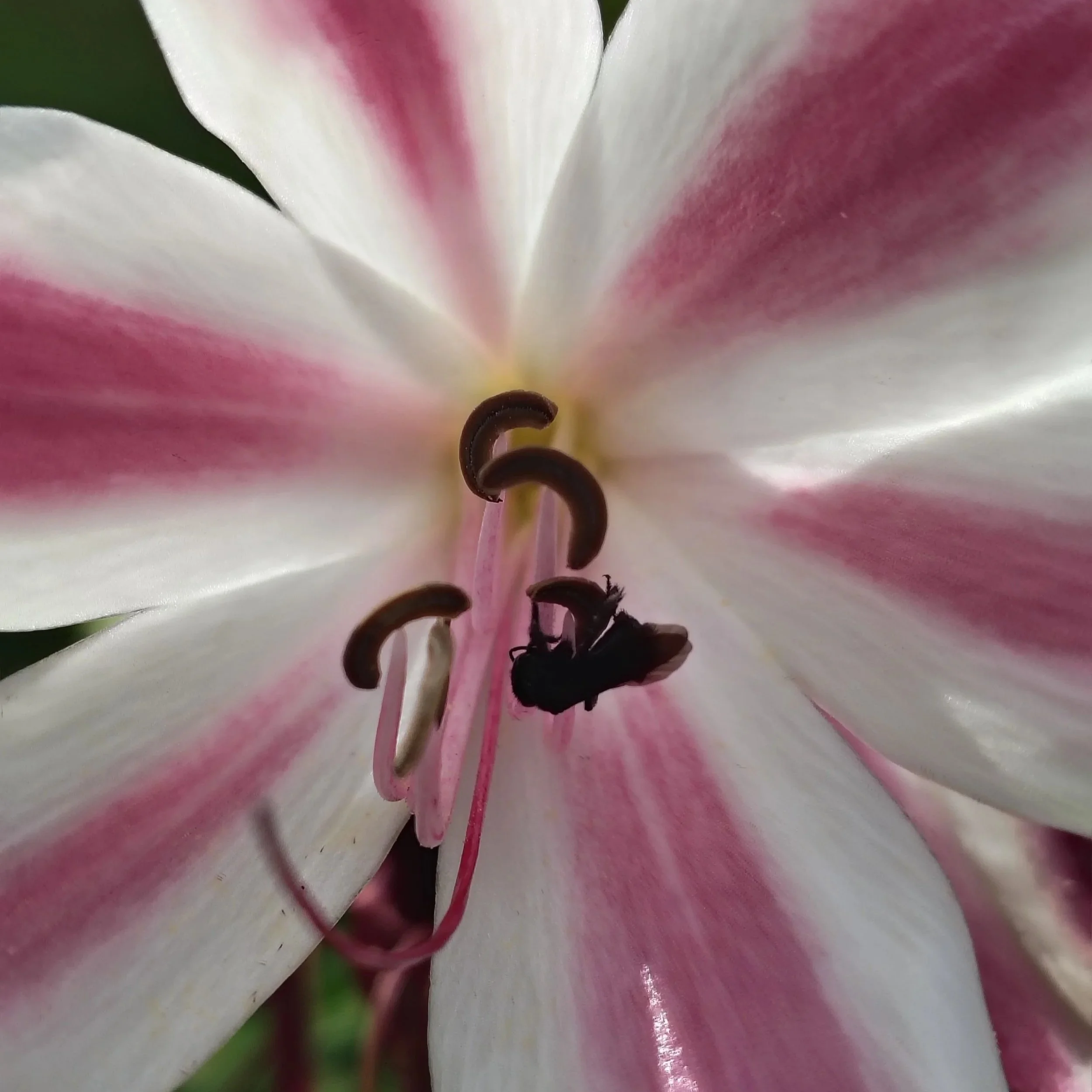
A small stingless bee on the anther of a flower in the Liliaceae family.
Almost all bees are impacted negatively by fires. However, stingless bees are likely more at risk than other species because their queen cannot fly once she has mated and begun to reproduce. Because the queen is so large, she cannot escape the flames of a wildfire like the queens of Apis mellifera. This is a huge risk for meliponiculturists, stingless beekeepers, as wildfires are growing in frequency and intensity each year. But these bees are faced with other environmental challenges.
Urbanization leads to decreased habitat. Clearing trees for roads and homes decreases the available resources that all animals have access to, but stingless bees are likely heavily impacted by the loss or fragmentation of habitat. It’s not as simple as just flying elsewhere. Though they can fly during warmer temperatures, they cannot fly in the rain, and they cannot fly far from their hives. Most meliponines have a flight range of 1,200 meters, less than 1 mile. European honeybees have an average radius of 1 to 2 miles from their hive. However, no bee wants to go far for very little food. That would be like us driving across the state to get a small snack.
This is one reason why bees are sounding the alarm. Scientists studying bee ecology have been pointing out red flags since the 60s, but little has changed for the better. And that’s to our detriment. If you want to learn more about how honeybees around the world have been suffering and what that could mean for us, I highly recommend Fruitless Fall by Rowan Jacobsen. It isn’t a fun read, but a vital sign for the near future. If you want to save the bees, we need to start saving trees. If we want to eat, we should probably consider our native pollinators’ needs first. And ironically, we should not start beekeeping. Jacobsen explains in great detail the research that backs this claim. And more research is published every year on why we don’t need more beekeepers.
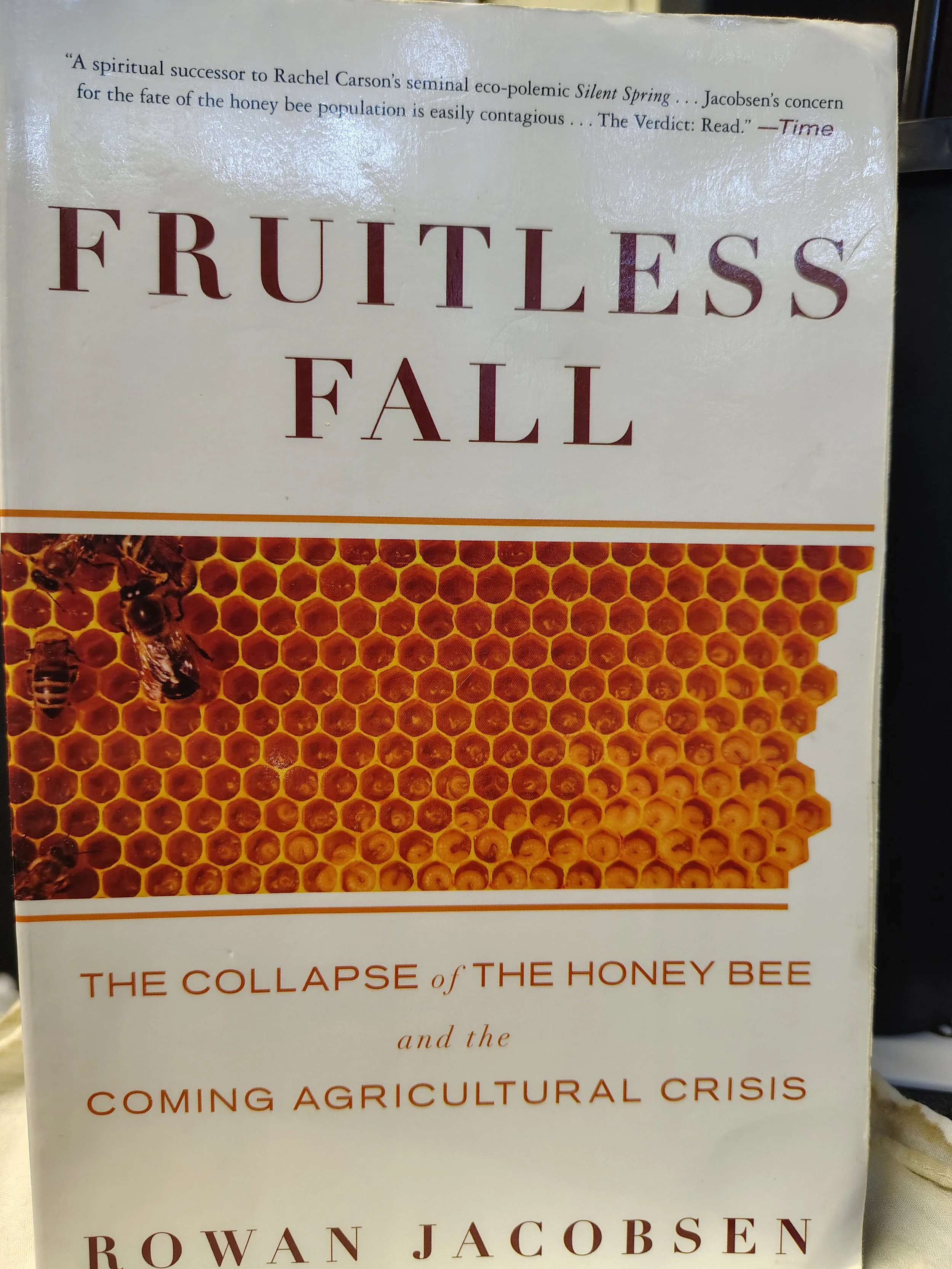
The author also describes the decades-long mystery that beekeepers have yet to resolve: why so many of their bees are dying. After decades of research, they found a name for it, Colony Collapse Disorder, but there remains no cure to be found. So beekeepers are faced with this difficult disease, and many environmental challenges like drought, and declining nutritional value of food for their bees. The last thing they need is more bees to feed. Dr. Marla Spivak and other researchers prefer that we learn to feed the bees, not become beekeepers. They stress the importance and general ease of learning what flowers are best to feed the bees that already live around you, rather than increasing the population of bees already struggling to find food. By increasing the number of beekeepers, we increase the number of hungry bees, resulting in increased competition for limited resources.
But Apis mellifera isn’t the only one pollinating our food. In fact, they don’t know how to pollinate plants like tomatoes, blueberries, and others that require sonication. It’s a cool process where a bee grabs the male parts of a flower and vibrates its wings at just the right frequency to release the pollen. But bumblebees and meliponines can. European honeybees are also territorial and can aggressively monopolize floral resources from native bees. This is an issue all around the world, not just in Belize. And some bees just aren’t big enough to fight back. If you want to learn what plants can support native pollinators near you, check out the Pollinator Conservation Program by the Xerces Society. It can help you find plants to feed your local insects to provide better and more food for all the insect pollinators near you.
Want to support my research and save the little bees? Check out my support page!
