Plants of Belize: Hamelia patens
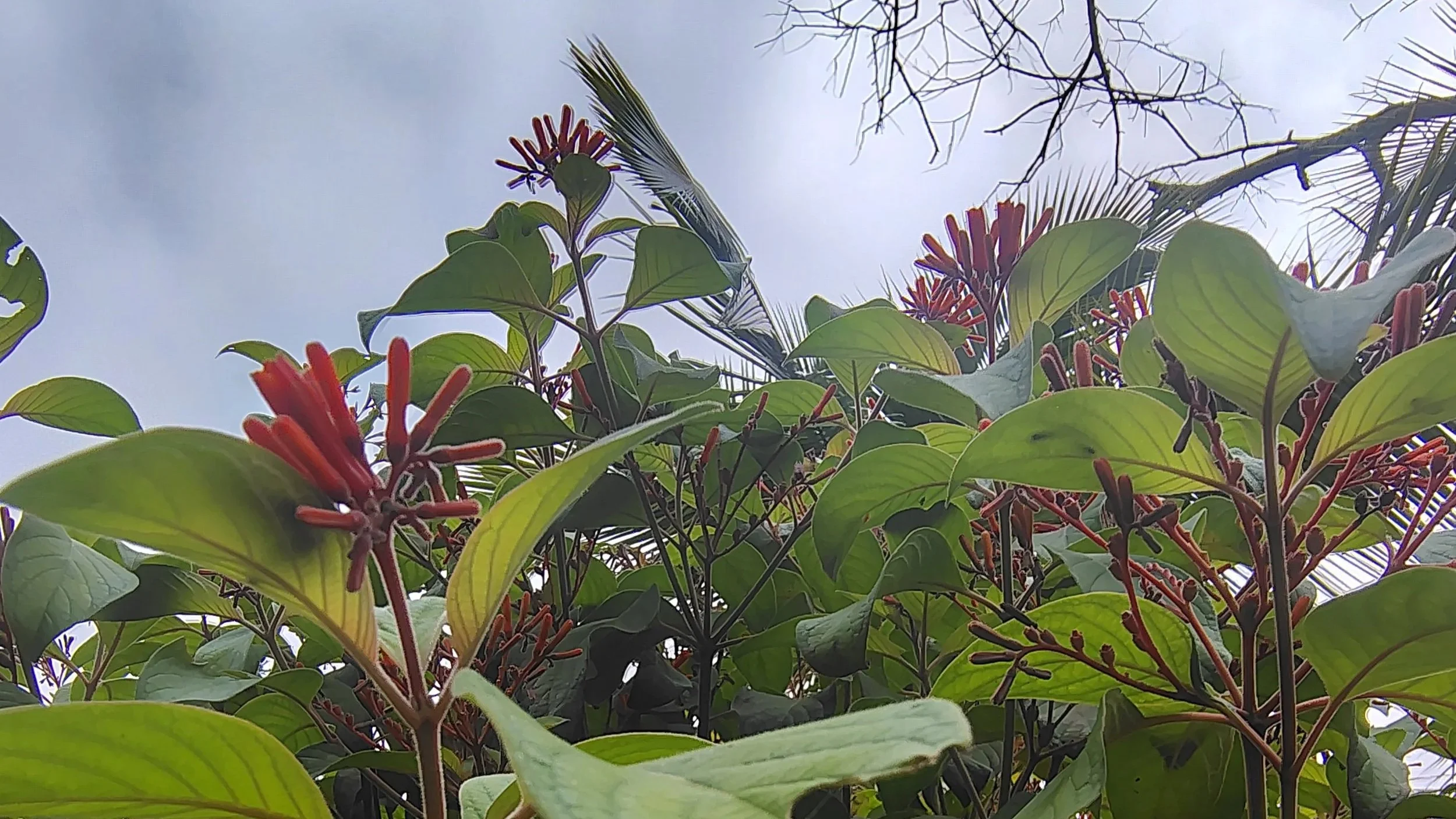
Firebush naturally growing in a yard in Belize among other cultivated plants.
If you were to visit Belize or read about the ethnobotany of the Maya, you would likely come across this plant fairly early on. Polly red-head, firebush, scarlet bush, are just a few of the many common names. The name I learned it by is ix cana’an in Q’eqchi’ Mayan. This plant naturally ranges throughout the tropical Americas but has been introduced to other regions of the world. Hamelia patens Jacq. has been utilized as medicine for many generations for a wide variety of ailments by the indigenous people of the Americas. Many studies have been conducted to determine the source of its activity and how it can treat so many conditions.
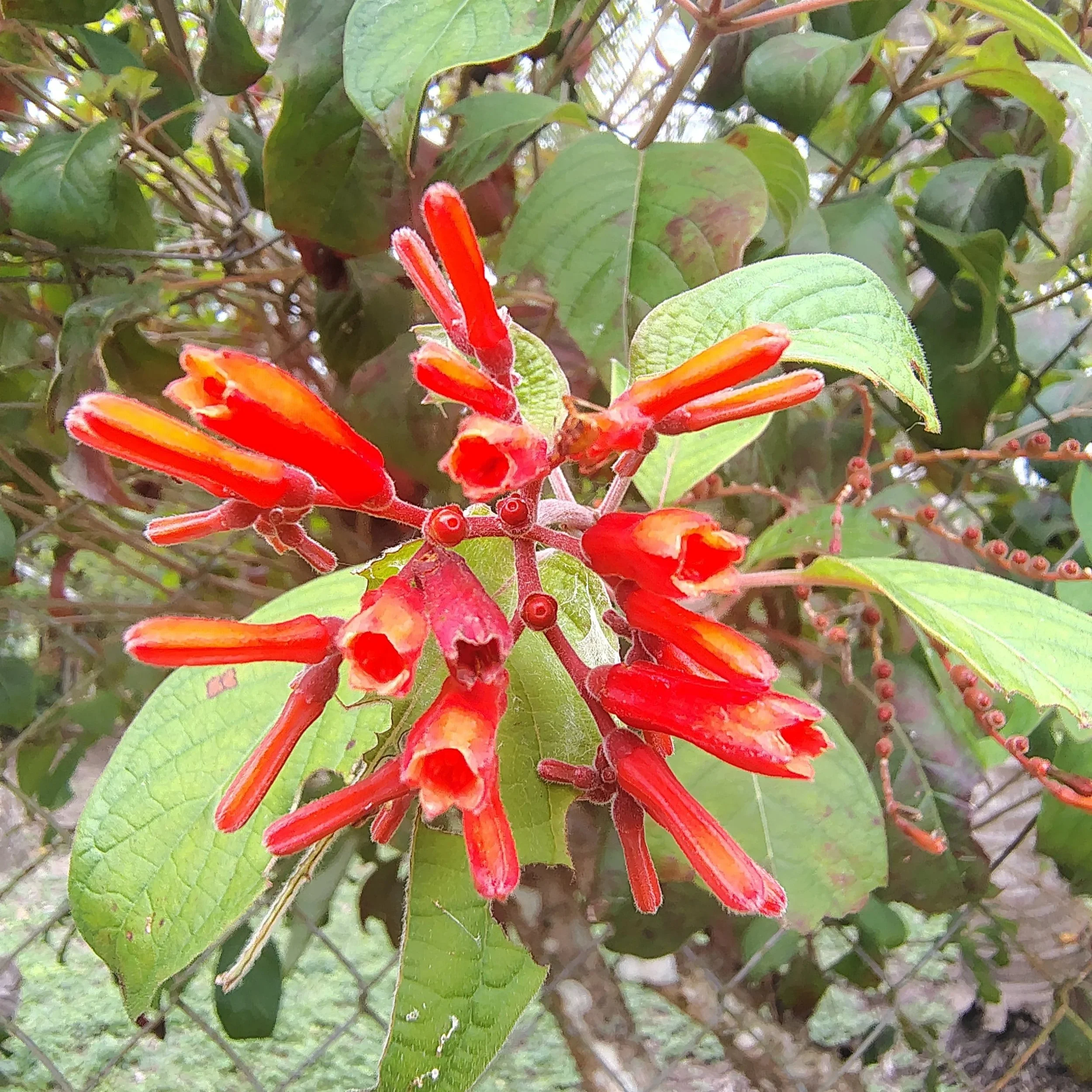
Hamelia patens Jacq. in flower and small fruits beginning to form.
I always find myself smiling at the familiar red tubular flowers when I spot them amidst the diverse flora. They are commonly grown in yards as they attract hummingbirds, like the Rufous-tailed hummingbird (Amazilia tzacatl). They’re too fast for me to get a picture, but I have seen them flitting about the blooms to feed many times. This aligns with the pollination syndrome, or a group of physical traits that adapted together to attract specific animals for pollination. One can tell these flowers likely are pollinated by hummingbirds because of their long, tubular, red flowers. The length of their tubular petals helps scientists narrow down a list of species. Red is often attractive to birds, but not bees, since the insects’ eyes don’t see red as we do. But birds do. So these are a perfect example of hummingbird-pollinated plants.
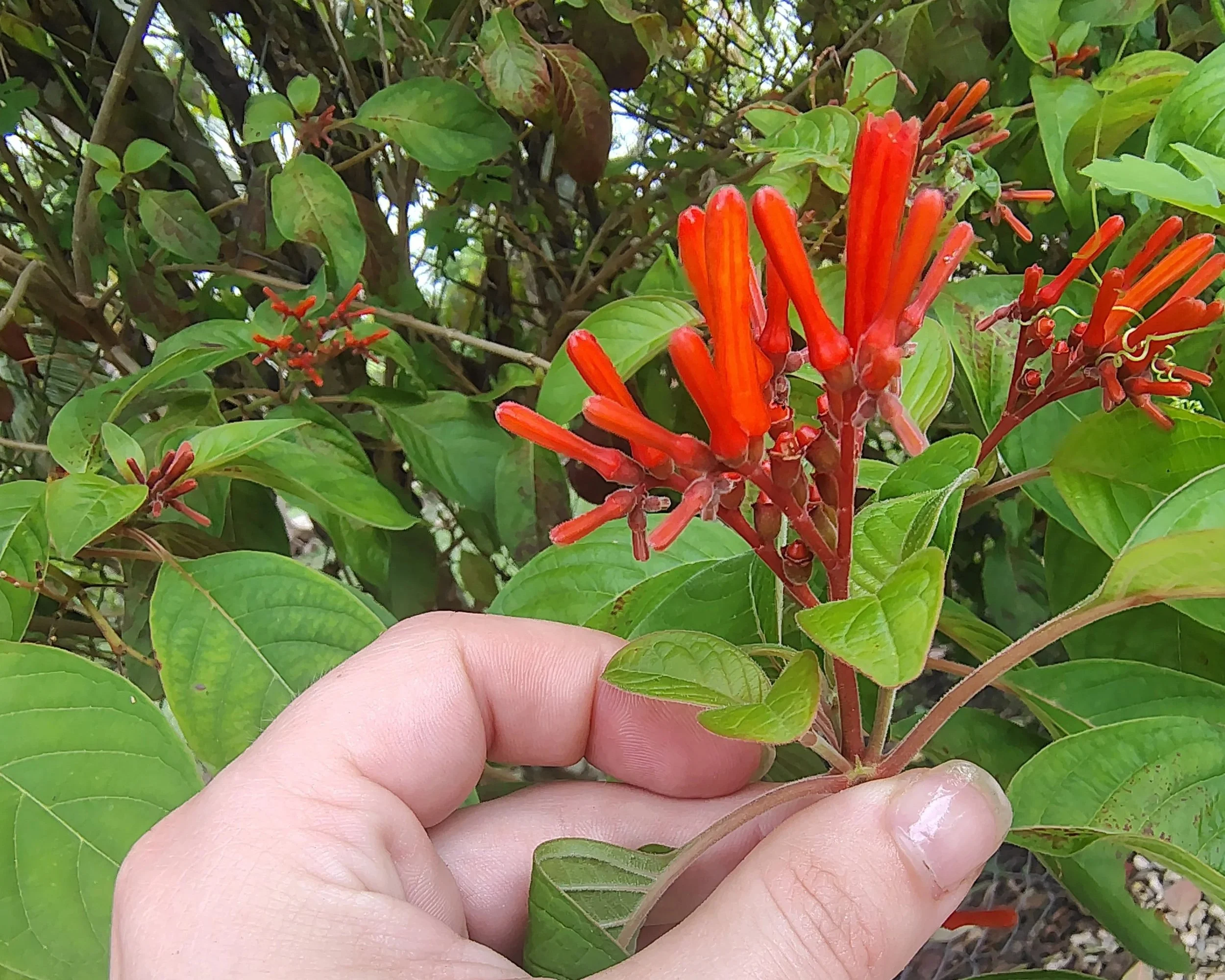
Me, holding an inflorensence of Hamelia patens Jacq. growing naturally in Belize.
Medicinal applications of this plant are vast. One of great interest to me is the local use to treat diabetes. My research assistants, had described this use while hiking in the jungle as we came across it. Other medicinal uses include, treating inflammation, wound healing, anti-bacterial, jaundice, and much more. I am interested in this plants’ application for treating diabetes as it is a chronic conditions that impacts thousands of lives around the world. Unfortunately, that number is growing.
“Globally 387 million people currently have diabetes and it is projected that this condition will be the 7th leading cause of death worldwide by 2030.”
Medicinal plants used in the traditional management of diabetes and its sequelae in Central America: A review by Giovannini et al., (2016) https://doi-org.prox.lib.ncsu.edu/10.1016/j.jep.2016.02.034
This is why more ethnobotanical research and medicinal plant research is necessary, even in developed countries. As more nations grow and develop infrastructure, diabetes is a condition that often tags along unwarrantedly. Some of you may be familiar with the two types of this condition: Type 1 Diabetes, from an inability to produce insulin in the pancreas, and Type 2, where the body cannot properly utilize insulin. According to the American Diabetes Association, more than 115 million people in just the United States are living with prediabetes, where blood glucose levels are higher than what is considered normal for the average person. Treating these conditions is costly and difficult since each person and their body is different. This is where plants come in.
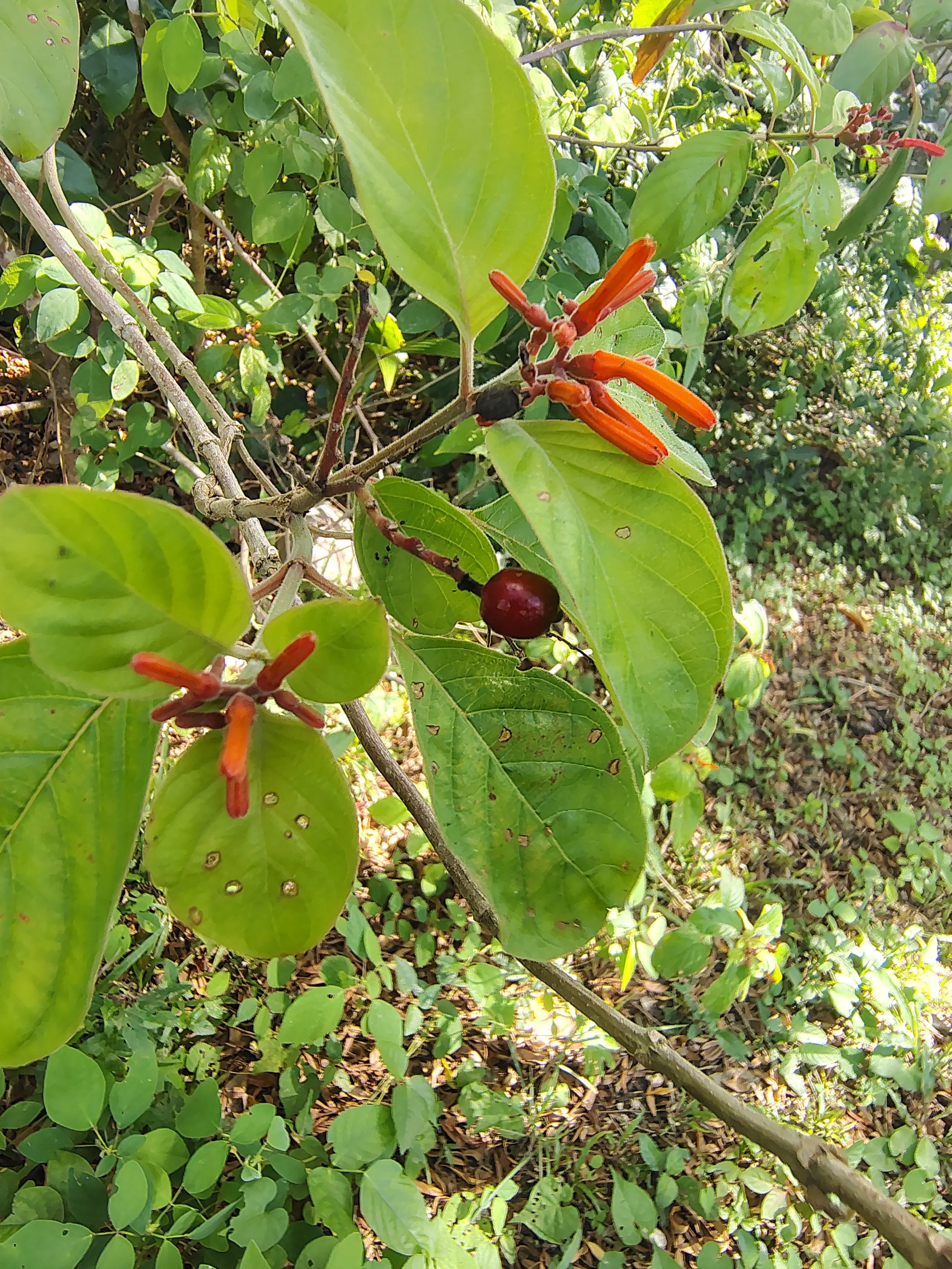
A single maturing fruit of Hamelia patens Jacq.
Natural remedies, herbal medicine, and traditional healing practices are important to medical research as the search for cures for many conditions continues. Thanks to the biodiversity of the tropics, many of the plants from the region remain under-researched or even undiscovered. Maya healers, h’men, bush doctors, and widwives have used many plants to treat ailments. This is extremely valuable knowledge, as many individuals have had little to no access to medical care. Hospitals in Belize were (and some still are) difficult to travel to in a reasonable amount of time, leaving some families and individuals to face a difficult choice: risk a long and potentially arduous trip to the nearest hospital or go to a local healer. This is why it is a rather common occurrence to find medicinal plants in rural Belize village communities, either in home gardens or along roadsides. As some rural villages struggle with food security and access to balanced nutritional foods, diabetes is something I hear many of them express concern about. Having ix cana’an close by could be vital for some families.
*Note: If I have mispelled any terms or inaccurately described this plant, feel free to contact me and share more information with me via email. I’m always happy to learn from others and will gladly correct any inaccuracies. Thanks for reading ~ K
